
A customer can rate your service 9 out of 10 and still never come back. It happens more often than most leaders admit.
The score looked good. The relationship did not hold. That gap is why businesses need to understand the difference between customer satisfaction and customer experience.
The two terms are often used as if they mean the same thing. They do not. One measures a moment. The other describes the whole journey.
This article explains both ideas in plain terms. You will see how they differ, how to measure each one, and how a customer satisfaction survey in Nigeria fits into a wider strategy. You will also find practical steps you can apply this quarter.
What Is Customer Satisfaction?
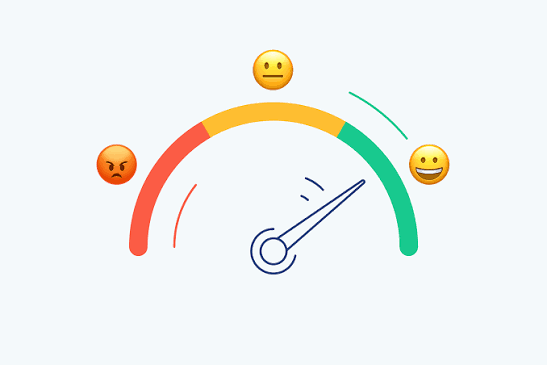
Customer satisfaction measures how well a product or service met a customer’s expectations. It answers a simple question: was the customer happy with what they got?
Most businesses track it with a short survey after a purchase, a service call, or a delivery. The customer gives a score, often from 1 to 5. The average becomes your Customer Satisfaction Score, or CSAT.
Think of a bank customer who has just resolved a card issue. The bank sends a text asking, “How satisfied were you with today’s service?” The customer replies with a 4. That score tells the bank how that single interaction went.
CSAT has real strengths. It is quick to collect. It is easy to explain to a board. It also points to problems at specific touchpoints, such as a slow checkout or a rude call.
But CSAT has limits. It captures how a customer felt at one point in time. It does not show what led up to that moment or what the customer will do next.
What Is Customer Experience?
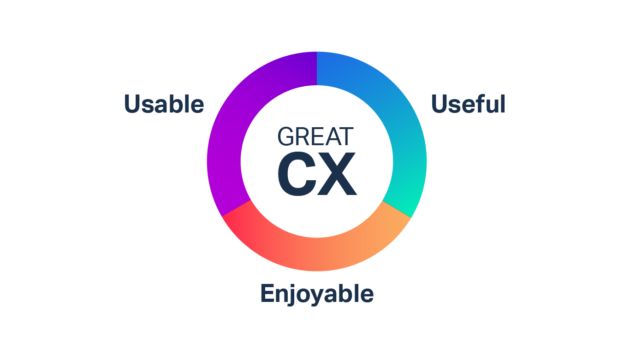
Customer experience, often shortened to CX, covers every interaction a customer has with your business. It starts before the first purchase and continues long after the last one.
That includes your ads, your website, your sales team, your pricing, your delivery, your packaging, your support line, and your follow-up. It also includes how easy you are to deal with when something goes wrong.
Take, for example, a Lagos customer who orders from an online store. She sees a post on Instagram. She visits the website on her phone. She pays by transfer. The rider calls twice to find her address. The product arrives late but works well. Support answers her WhatsApp message within ten minutes.
Each step shaped how she feels about the brand. Together, they make up her experience.
CX is broader than satisfaction. It looks at the full relationship, not just one score. It also covers emotion, effort, and trust. These are harder to measure, but they drive loyalty more than any single rating.
Customer Satisfaction vs. Customer Experience: The Key Differences
The simplest way to separate the two is this. Satisfaction is an outcome. Experience is the path that produces it.
| Factor | Customer Satisfaction | Customer Experience |
|---|---|---|
| Scope | One interaction or purchase | The entire customer journey |
| Time frame | A single moment | Before, during, and after purchase |
| What it tells you | Whether expectations were met | How the customer feels about the brand overall |
| Common metric | CSAT score | NPS, Customer Effort Score, retention, journey analysis |
| Nature of data | Mostly a number | Numbers plus feedback, behavior, and emotion |
| Typical owner | Support or service team | Whole company, led by leadership |
| Main use | Fix specific touchpoint problems | Shape strategy and long-term loyalty |
Here is a useful way to remember it. Satisfaction asks, “Did we meet the need?” Experience asks, “How did it feel to deal with us from start to finish?”
A customer can be satisfied and still have a poor experience. Imagine a customer who gets the right product but waits three weeks, chases four staff members, and repeats her complaint each time. She may rate the final result a 4. She will probably not recommend you.
The reverse also happens. A customer may have a smooth journey but receive a product that falls short. The experience was good. The satisfaction was not.
Why the Difference Matters for Businesses in Nigeria
Nigerian customers have many choices and little patience for poor service. They also talk. A bad experience travels fast through WhatsApp groups, X threads, and word of mouth.
Several local realities make the distinction more important.
Trust is earned slowly. Many buyers have dealt with delayed deliveries, fake products, and unanswered complaints. A brand that is consistent stands out.
Channels are mixed. A customer may discover you on Instagram, ask questions on WhatsApp, pay at a branch, and collect from a rider. If the experience breaks between channels, satisfaction scores will not show why.
Price pressure is high. When people watch every naira, they expect value at every step. A small frustration can push them to a competitor with similar prices.
Relationships matter. In many sectors, customers buy from people they feel they know. Warm service, clear communication, and respect often decide who wins the repeat order.
A business that tracks only CSAT sees part of this picture. A business that studies experience sees the whole of it.
How to Measure Customer Satisfaction
Measuring satisfaction is straightforward when you keep the process disciplined. A well-run customer satisfaction survey in Nigeria should follow a few simple rules.
Ask at the right time. Send the survey soon after the interaction, while the memory is fresh. For a delivery, ask within a day. For a support call, ask within an hour.
Keep it short. Three to five questions is enough. Long surveys get ignored, and the people who finish them are rarely typical.
Use clear scales. A 1 to 5 scale works well. Define what each number means so answers are consistent.
Add one open question. Ask, “What is one thing we could have done better?” The written replies often explain the scores.
Use channels your customers use. In Nigeria, that often means SMS, WhatsApp, phone calls, or in-person feedback, not only email.
Cover different segments. Survey retail buyers, corporate clients, new customers, and repeat customers separately. Their needs differ.
Once you have results, look beyond the average. Compare scores by branch, product, channel, and customer type. The pattern behind the average is where the useful findings sit.
How to Measure Customer Experience
Experience is harder to capture in one number. Most businesses use several tools together.
Net Promoter Score (NPS). This asks how likely a customer is to recommend you on a scale of 0 to 10. It reflects overall loyalty rather than one interaction.
Customer Effort Score (CES). This asks how easy it was to get something done. Low effort usually leads to higher loyalty.
Journey mapping. You chart every step a customer takes, from first contact to repeat purchase. Then you mark where they feel delighted, confused, or frustrated.
Behavioral data. Repeat purchase rates, complaint volumes, churn, and referral numbers show what customers actually do, not just what they say.
Qualitative research. Interviews, focus groups, and mystery shopping reveal the reasons behind the numbers. They also surface issues that surveys miss.
Employee feedback. Frontline staff see problems first. Ask them what customers complain about and which internal processes slow them down.
The strongest approach combines these methods. Numbers show what is happening. Conversations explain why.
Common Mistakes Businesses Make
Even strong companies fall into a few predictable traps.
Treating a high CSAT as proof of loyalty. Satisfied customers still leave when a competitor offers a better deal or an easier process.
Measuring without acting. Customers notice when they give feedback and nothing changes. Over time, they stop responding.
Surveying only happy customers. If you only ask people who completed a purchase, you miss those who gave up halfway.
Leaving CX to one department. Experience cuts across marketing, sales, operations, finance, and support. If only one team owns it, gaps will appear between them.
Ignoring the employee side. Staff who feel unsupported rarely deliver warm service. Internal experience shapes external experience.
Collecting too much data and too little insight. Dashboards are useful only when someone turns them into decisions.
How Satisfaction and Experience Work Together
The two are not rivals. They work best as a pair.
Think of customer experience as the strategy. Customer satisfaction is one of the ways you check whether the strategy is working.
Here is how that looks in practice. Your journey map shows that customers struggle during account setup. You redesign the process. Then your CSAT surveys at that step show whether scores improve. Your NPS and retention numbers show whether the change built loyalty over time.
Experience guides what you fix. Satisfaction confirms whether the fix worked.
Practical Steps to Improve Both
You do not need a large budget to begin. These steps work for most mid-sized businesses.
- Map the journey. List every touchpoint a customer has with you. Be honest about the weak ones.
- Run a baseline survey. Measure current satisfaction at key touchpoints so you have a starting point.
- Talk to customers directly. Hold a few interviews. Ask what nearly made them leave.
- Fix the biggest friction first. Choose one or two issues that hurt the most customers and solve them well.
- Close the loop. Tell customers what you changed because of their feedback. This builds trust.
- Train and empower frontline staff. Give them authority to solve common problems without long approvals.
- Track results over time. Review CSAT, NPS, and retention every quarter. Adjust as patterns emerge.
- Assign clear ownership. Make a senior leader responsible for the full experience, not only for the scores.
How Novatia Consulting Can Help
Many organizations know that customer feedback matters. Fewer have the time or structure to collect it well and turn it into action.
Novatia Consulting is a management consulting and market research firm based in Abuja. We work with businesses across Nigeria and Africa. Our team designs and runs customer satisfaction studies, builds experience measurement frameworks, and helps leadership teams act on the findings.
Whether you are starting your first customer satisfaction survey in Nigeria or rebuilding a program that has stalled, we can help you get reliable data and a clear plan.
To discuss your needs, contact the Novatia team and request a scoped proposal.
Frequently Asked Questions
What is the main difference between customer satisfaction and customer experience?
Customer satisfaction measures how well a single purchase or interaction met expectations. Customer experience covers the entire relationship across every touchpoint. Satisfaction is one result of experience.
Can a customer be satisfied but still have a bad experience?
Yes. A customer may get the right product but face delays, repeated follow-ups, or poor communication along the way. The final outcome feels fine, yet the journey leaves a negative impression.
How do you measure customer satisfaction?
The most common method is a short survey that asks customers to rate their experience, usually on a 1 to 5 scale. The average forms your CSAT score. Add one open question to understand the reasons behind the ratings.
Is NPS a satisfaction metric or an experience metric?
NPS is generally treated as an experience and loyalty metric. It reflects how likely customers are to recommend you based on the overall relationship, not a single interaction.
How often should a business run a customer satisfaction survey in Nigeria?
Collect feedback continuously at key touchpoints, such as after a purchase or support call. Then run a broader review each quarter or half-year to spot trends across segments.
Which matters more for growth, satisfaction or experience?
Both matter, but experience has the wider impact on loyalty and referrals. Satisfaction helps you check specific touchpoints, while experience shapes whether customers stay and recommend you.
Do small businesses need a formal customer experience strategy?
Yes, though it can be simple. A small business can map its main touchpoints, collect short feedback, and fix the top two or three issues. Consistent, small improvements often deliver the best returns.
Related posts:
 Discovering the Best Market Research Companies in Africa – Novatia Consulting Leads the Way!
 A Comprehensive Look At Novatia Consulting’s Services In Nigeria
Energy Efficiency & Resource Management Consulting In Nigeria – Novatia Consulting
 The Importance Of Ethics And Integrity In Management Consulting: Novatia Consulting’s Approach In Nigeria