A feasibility study for agribusiness in Nigeria tells you whether your farm or processing plant can make money before you spend a kobo. Many investors skip this step. They see a growing population and strong food demand, so they rush in. Months later, they face high costs, weak buyers and idle equipment.
This guide walks you through the process in plain language. You will see where the opportunities sit, what a good study covers and how to avoid costly mistakes. Whether you plan a poultry farm, a cassava mill or a large commercial farm, the steps are much the same.
Why a Feasibility Study for Agribusiness in Nigeria Is Essential Before Investing
Agriculture looks simple from the outside. You plant, you harvest and you sell. In practice, it has more moving parts than most sectors. Weather, input prices, transport and buyer habits all change your profit.
A feasibility study for agribusiness in Nigeria tests your idea against these realities. It answers one direct question. Should you invest, change the plan or walk away?
Consider an investor who buys 50 hectares outside Kaduna because the land is cheap. Later, he learns the nearest processor is 300 kilometres away. Haulage eats the margin. A basic study would have caught that in the first week.
Besides saving money, a study helps you raise funds. Lenders such as the Bank of Agriculture and agencies like NIRSAL want evidence before they commit. A clear report shows you have done your homework. It also gives your team one plan to follow.
So the study is not paperwork. It is protection for your capital.
Agribusiness Investment Opportunities in Nigeria: Where Are the Commercial Prospects?
Nigeria has more than 200 million people to feed. That demand does not slow down. As a result, agriculture investment in Nigeria offers real openings across the whole agricultural value chain.
Start with staple crops. Rice, maize, cassava, soybean and sorghum all have steady buyers. Local processors often struggle to find enough quality supply. That gap is a commercial prospect.
Livestock farming is another strong area. Poultry, catfish and ruminant farming serve a market that keeps growing. Meanwhile, export crops such as cocoa, sesame and cashew reach buyers abroad. The African Continental Free Trade Area may widen those export routes further.
Agro-processing deserves special attention. Farmers lose a large share of their harvest after picking because of poor storage. Cold rooms, dryers, mills and packaging lines solve that problem. They also add value to raw produce.
For current sector data, check the National Bureau of Statistics and the FAO Nigeria office. However, numbers alone will not pick your best opportunity. Your location, budget and skills matter just as much.
What a Feasibility Study for Agribusiness in Nigeria Should Cover
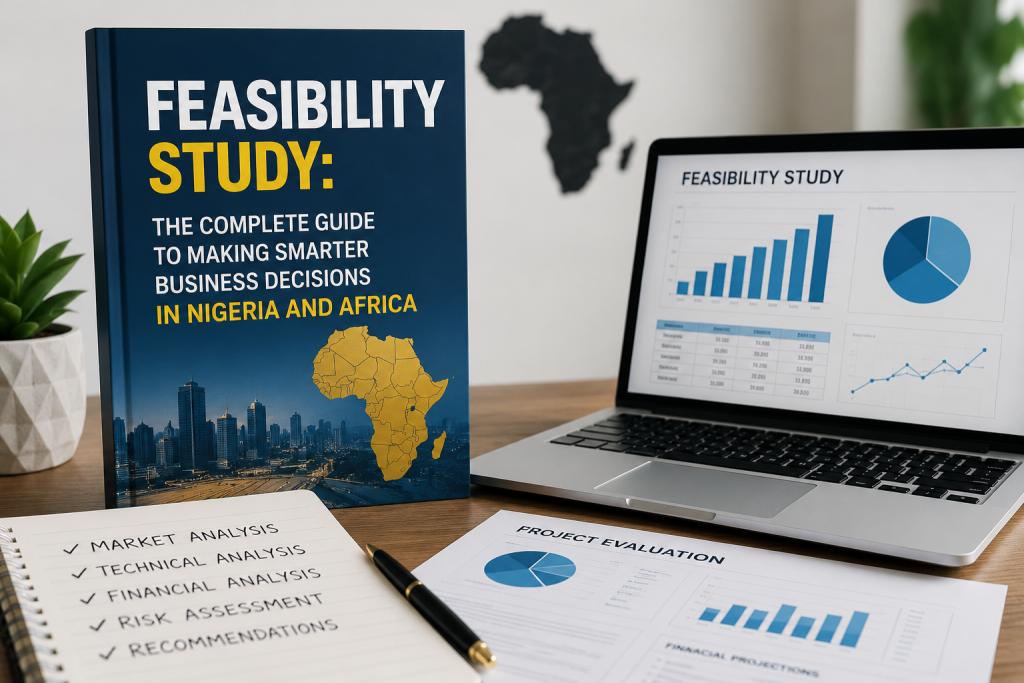
A good feasibility study for agribusiness in Nigeria looks at the project from every angle. It should not read like a sales pitch. It should read like an honest audit.
Here are the core parts:
- Market assessment: Who will buy, at what price and in what volume?
- Technical feasibility: Can you actually produce at the scale you plan?
- Operational feasibility: Do you have the people, systems and suppliers to run it daily?
- Financial feasibility: What are the production costs, revenue and investment appraisal results?
- Legal and regulatory review: Which land, licence and product approvals do you need?
- Risk assessment: What could go wrong, and how will you respond?
Each part feeds the next. For example, market demand sets your production target. That target then drives your equipment, staffing and cash needs.
An agribusiness feasibility study should also end with a clear verdict: GO, ADJUST OR STOP. Anything vaguer than that is not useful to a decision maker.
If you need support on the commercial side, our market entry advisory team can help.
Agricultural Market Research in Nigeria: Understanding Demand, Competition and Supply Chains
Market research is where many agricultural projects are won or lost. You need to know who will buy your produce before you plant a single seed.
Begin with demand. Who are the buyers? They may be flour mills, breweries, hotels, supermarkets, exporters or traders in markets like Mile 12 in Lagos and Dawanau in Kano. Each group pays different prices and wants different quality.
Next, study your competition. Look at local producers and imports. Ask how they price, how they package and how they deliver. Then ask where they fall short.
After that, map the supply chain. Prices often double between the farm gate and the city shelf. Middlemen, transport costs and storage charges all take a share. If you understand each link, you can decide where to sit in the chain.
Also watch seasonality. Maize can be cheap at harvest and costly in the lean months. A smart plan uses storage to catch that difference.
Good market research for agribusiness investments in Nigeria blends desk research with field visits. Talk to farmers, buyers and transporters directly. Their answers often beat any report. You can learn more about our approach on our market research page.
Technical Feasibility in a Feasibility Study for Agribusiness in Nigeria: Land, Infrastructure, Technology and Capacity
Technical feasibility asks a simple question. Can this project work on the ground?
Start with land. Check the title, the size and the soil. Under the Land Use Act, a clear Certificate of Occupancy matters. Disputes over land can stall a project for years.
Next, test the water supply. Rain-fed farming carries more risk than irrigated farming. A borehole or river access can change your yields.
Then look at agricultural infrastructure. Are the roads passable in the rainy season? Is the grid power stable, or will you rely on diesel? Diesel costs can quietly wreck a budget.
Technology comes next. Choose equipment your team can use and repair locally. A fancy machine with no spare parts is a liability. Finally, match your production capacity to the market. Building a plant for 10 tonnes a day makes little sense if you can only source three.
Technical findings feed straight into your cost estimates. For that reason, never treat this section as an afterthought.
Financial Feasibility of Agricultural Projects in Nigeria: Understanding Costs, Revenue and Profitability

Money decides whether a good idea becomes a good business. This section turns your plan into numbers.
First, list the cost of setting up an agribusiness in Nigeria. Include land, buildings, equipment, seedlings or stock, and working capital. Then add running costs such as labour, feed, fertiliser, fuel, transport and licences.
Next, estimate your revenue. Use realistic prices, not the best price you ever heard. Allow for losses from spoilage, theft and poor yields.
Naira movement deserves its own line. Imported inputs, like feed ingredients or machines, can jump in price quickly. Inflation affects wages and fuel too. So build in a cushion.
To assess the profitability of an agricultural investment, use a few simple tools:
- Financial projections over three to five years
- Payback period, which shows how fast you recover your money
- Return on investment (ROI) and internal rate of return
- Sensitivity tests, which show what happens if prices fall or costs rise
These tools support a sound investment appraisal. They also show farm profitability under good and bad conditions. For macro trends such as interest rates and exchange rates, see the Central Bank of Nigeria.
How to Conduct a Feasibility Study for Agribusiness in Nigeria
Many owners ask where to begin. The process is easier when you break it into steps.
- Define the project. State the crop or product, the location, the scale and your goal.
- Collect market data. Gather prices, buyer needs and competitor details.
- Visit the site. Test the soil, water and access roads yourself.
- Assess the technical needs. List equipment, staff and inputs.
- Build the financial model. Estimate costs, revenue, cash flow and returns.
- Test the risks. Run best-case and worst-case scenarios.
- Write the report and decide. Summarise the findings and give a clear recommendation.
The whole exercise usually takes several weeks. Complex projects take longer. However, rushing it defeats the purpose.
How to conduct a feasibility study for agribusiness in Nigeria also depends on honesty. Use real quotes from suppliers. Speak to real buyers. If a number looks too good, question it.
Finally, keep the study alive. Update it when prices, rules or your plans change.
Feasibility Study for Commercial Farming in Nigeria: Assessing Production and Operational Risks
Commercial farming brings scale. It also brings scale of risk. A feasibility study for agribusiness in Nigeria that targets large farms must look closely at production and day-to-day operations.
On the production side, check yields against realistic benchmarks. Ask local research institutes what farmers in your area actually harvest. Do not rely on brochure figures.
On the operations side, think about labour. Can you find skilled workers nearby? Will you need housing for staff? Farm security also matters in some regions, so plan for it early.
A feasibility study for poultry farming in Nigeria has its own points. Feed often takes the largest share of costs. Disease control, day-old chick supply and power for brooding are key too.
A feasibility study for fish farming in Nigeria needs a different focus. Water quality, pond design, fingerling supply and feed conversion rates drive results. Harvest timing and live-fish handling affect your price.
In every case, write down the operational risks and assign an owner to each one. That habit turns worry into action.
Feasibility Study for Agro-Processing Business in Nigeria: From Raw Materials to Market Opportunities

Processing can earn higher margins than farming alone. It also asks for more planning. A feasibility study for agribusiness in Nigeria that covers agro-processing should start with the raw material.
Where will your supply come from? Will you grow it, buy from smallholders or both? Prices swing with the seasons, so a processor needs a steady sourcing plan. Out-grower schemes can help here.
Next, match the machines to your volume. Food processing equipment varies widely in price and output. Buy for the market you can reach, not the one you hope for.
Regulation is another step. Most packaged foods need NAFDAC registration. That takes time and money, so include both in your plan.
Then think about the market. Cassava can become flour, starch or garri. Tomatoes can become paste. Each product has a different buyer, price and shelf life.
If you wonder how to start an agricultural processing business in Nigeria, begin with the buyer. Work backwards to the product, the plant and the supply. That order protects you from building something nobody needs.
Agricultural Business Plan in Nigeria: Translating Feasibility Findings into an Investment Strategy
A study tells you whether to invest. A business plan tells you how. The two documents work together.
Your agricultural business plan in Nigeria should draw directly from the feasibility study. Use the same market data, the same costs and the same risk findings. If the plan contradicts the study, lenders will notice.
A strong plan includes:
- A clear business model and target customers
- A production and marketing plan
- A funding structure, with equity and debt shown separately
- A phased roll-out, so you can start small and scale
- Key milestones and who is responsible for them
In other words, the study gives you proof, and the plan gives you direction. This is why a feasibility study for agribusiness in Nigeria should come first.
Many investors also use the plan to approach banks and partners. If you need help turning findings into a persuasive document, see our business proposal development service.
Common Risks That Can Undermine Agribusiness Investments in Nigeria
Every sector has risks. Agriculture simply shows them faster. A proper risk assessment names each one and plans a response.
Here are the most common:
- Currency and inflation: Input costs can rise faster than selling prices.
- Weather and climate: Floods, droughts and late rains hit yields hard.
- Infrastructure gaps: Bad roads and weak power raise costs and cause losses.
- Post-harvest losses: Poor storage destroys value before produce reaches buyers.
- Policy shifts: Changes in import rules, duties or tax can alter your margins.
- Insecurity: Some areas face threats to farms, workers and transport routes.
- Buyer risk: Late or missed payments can choke your cash flow.
You cannot remove every risk. Still, you can reduce them. Use crop insurance where it fits. Spread your buyers. Keep a cash reserve. Choose sites with better road access.
The goal is not to avoid risk. It is to know it, price it and decide if the return is worth it.
Why Engage Professional Agribusiness Consultants in Nigeria?
You can write a basic study yourself. Many people try. However, outside experts bring things that insiders often miss.
First, they bring fresh eyes. Owners love their projects, and that can blur judgment. A consultant has no emotional stake. As a result, the advice is more candid.
Second, they bring data and tools. Agribusiness consultants in Nigeria already know the price trends, the buyer networks and the regulatory steps. That saves weeks of work.
Third, they add credibility. Lenders and partners trust independent analysis more than a self-written report. A well-built feasibility study for agribusiness in Nigeria from a credible adviser can speed up funding talks.
Professional agricultural consultancy services in Nigeria also cut costly errors. A consultant’s fee is small next to the price of a failed farm. Think of it as insurance that also gives you a plan.
Choose an adviser who asks hard questions, shows their method and welcomes your own field knowledge.
How Novatia Consulting Supports Your Feasibility Study for Agribusiness in Nigeria
Novatia Consulting is a management consulting, market research and corporate advisory firm based in Abuja. We serve clients across Nigeria and the wider African market. Our clients range from multinationals and energy companies to local enterprises.
For investors, we offer support across the decision process:
- Market research and assessment to size demand and map competitors
- Market entry advisory to shape your route into new regions or products
- Financial and commercial analysis to test costs, revenue and returns
- Business proposal development to turn findings into an investment case
We keep our reports plain and practical. You get clear numbers, honest risk findings and a firm recommendation. We believe a feasibility study for agribusiness in Nigeria should help you decide, not just fill a binder.
Ready to test your idea? Contact Novatia Consulting to discuss your project.
Frequently Asked Questions About Agribusiness Feasibility Studies in Nigeria
What is a feasibility study for agribusiness in Nigeria? It is a structured review of a farm or agro-business idea. It checks the market, technical needs, costs and risks before you invest.
Why is an agricultural feasibility study in Nigeria necessary? It shows whether your project can earn a profit. It also helps you avoid costly errors and win lender confidence.
How much does a feasibility study for agribusiness in Nigeria cost? Cost depends on project size and depth. Simple studies cost far less than full studies for large commercial farms or processing plants.
How long does an agribusiness feasibility study take? Most studies take four to twelve weeks. Complex projects with field surveys take longer.
What should an agricultural investment feasibility study include? It should cover market assessment, technical and operational review, financial projections, legal checks and risks.
Is agriculture investment in Nigeria profitable? It can be, if you choose the right product, location and scale. A study shows your expected return before you commit funds.
Can I use one study for poultry and fish farming? No. Each needs its own study because feed, disease, water and market factors differ.
How do I assess the profitability of an agricultural investment? Compare total costs with expected revenue over several years. Then check ROI, payback period and the effect of price changes.
Should I hire agribusiness consultants in Nigeria? Yes, if you lack local data or funding experience. They save time and add credibility.
What is the difference between a feasibility study and an agricultural business plan in Nigeria? The study tests if the idea works. The business plan explains how you will build and run it.
Final Thoughts: Turning Research into a Confident Investment Decision
Agriculture in Nigeria rewards patience, planning and good information. The opportunities are real. So are the risks.
A feasibility study for agribusiness in Nigeria helps you separate the two. It replaces hope with evidence. Whether you grow, rear or process, you will invest with clearer eyes.
So before you buy land or order equipment, run the numbers and test the market. The hours you spend now can save years of regret later.