


Africa’s infrastructure boom presents unprecedented opportunities, yet history teaches us that success depends heavily on thorough risk analysis during feasibility studies. As projects scale up across the continent, understanding and mitigating risks becomes the difference between transformative success and costly failure.
At Novatia Consulting, we’ve witnessed firsthand how comprehensive risk assessment transforms project outcomes. Through our extensive experience with large-scale African projects, we’ve learned that effective risk analysis isn’t just about identifying potential problems—it’s about creating roadmaps for sustainable success in complex, dynamic environments.
Why Risk Analysis Is Crucial in Every Feasibility Study in Africa
Africa’s unique business landscape demands a different approach to risk assessment. Unlike developed markets with predictable regulatory frameworks, African projects often face rapidly changing political climates, currency fluctuations, and infrastructure challenges that can derail even the most promising ventures. Consider the Lagos-Calabar Coastal Railway project, which faced multiple delays due to inadequate initial risk assessment regarding land acquisition and community relations.
The cost of inadequate risk analysis extends far beyond financial losses. When projects fail, they create ripple effects that impact local communities, investor confidence, and future development opportunities. A comprehensive feasibility study in Africa must account for these interconnected risks, recognizing that success requires more than just technical and financial viability—it demands social, political, and environmental sustainability.
Smart investors and developers now recognize that upfront investment in thorough risk analysis saves millions later. Our experience shows that projects with comprehensive risk assessment during feasibility studies are 60% more likely to complete on time and within budget. This isn’t about being pessimistic; it’s about being prepared.
Key Risk Assessment Factors for Infrastructure Projects in Africa
Infrastructure development across Africa faces distinct challenges that require specialized assessment approaches. Currency volatility remains a primary concern, with exchange rate fluctuations capable of transforming profitable projects into financial disasters overnight. The recent devaluation cycles in countries like Ghana and Nigeria demonstrate how currency risk can impact project economics long after construction begins.
Supply chain disruptions present another critical risk factor often underestimated in initial assessments. Africa’s infrastructure projects frequently depend on imported materials and equipment, making them vulnerable to global supply chain shocks, port delays, and transportation bottlenecks. The COVID-19 pandemic highlighted these vulnerabilities, causing project delays across the continent as material costs soared and delivery schedules collapsed.
Skilled labor availability constitutes a third crucial risk factor that many feasibility studies inadequately address. While Africa has abundant human resources, specialized technical skills often remain scarce, leading to dependency on expensive expatriate labor or extended training programs. Projects that fail to account for these human capital constraints frequently experience significant cost overruns and timeline extensions.
Understanding Project Risk Analysis in Nigeria’s Emerging Sectors
Nigeria’s economic diversification drive has opened new sectors ripe for investment, yet each presents unique risk profiles requiring specialized analysis approaches. The technology sector, while promising, faces risks related to digital infrastructure gaps, cybersecurity threats, and regulatory uncertainty around data protection and fintech operations. Recent changes in foreign exchange policies have also created volatility in tech investment flows.
The renewable energy sector offers tremendous potential but carries risks related to grid integration, policy consistency, and financing structures. Solar and wind projects must navigate complex agreements with distribution companies while managing risks associated with Nigeria’s electricity market reforms. Project risk analysis Nigeria must account for these sector-specific challenges while identifying opportunities for risk mitigation through innovative financing and partnership structures.
Agricultural value chain projects face different risk matrices, including climate variability, post-harvest losses, and market access challenges. These projects require risk assessment frameworks that consider seasonal variations, storage infrastructure limitations, and the complex relationships between smallholder farmers and larger processing facilities. Success depends on understanding these interconnected risks and developing strategies that address multiple risk layers simultaneously.
Lessons from Failed Large-Scale Projects Across Africa
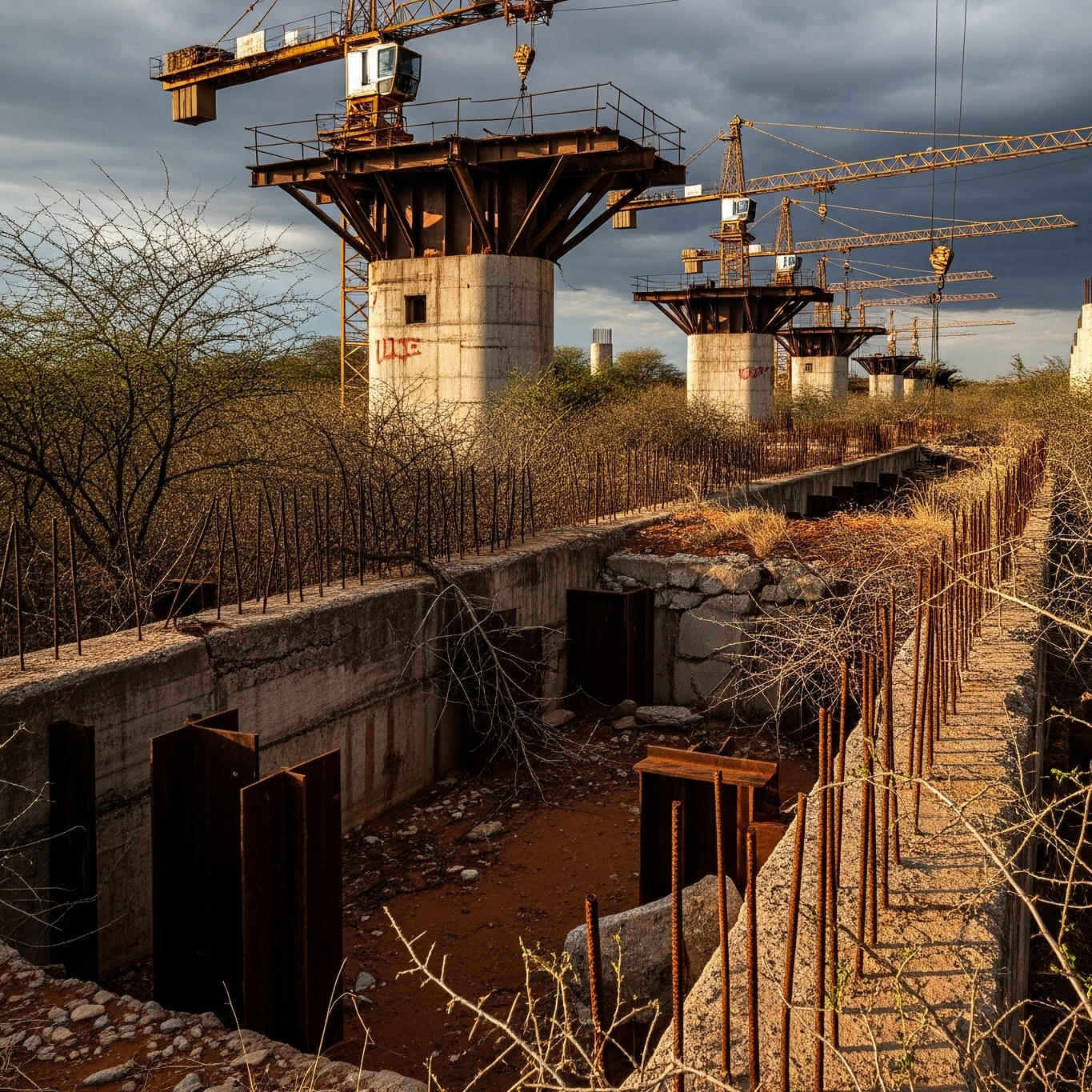
The Ajaokuta Steel Complex in Nigeria stands as a cautionary tale about the consequences of inadequate risk analysis. Despite decades of investment totaling over $8 billion, the project remains incomplete due to poor initial feasibility studies that failed to account for raw material sourcing challenges, technology transfer complexities, and changing global steel market dynamics. The project’s struggles highlight how technical feasibility alone cannot guarantee success without comprehensive risk assessment.
Kenya’s Standard Gauge Railway project offers mixed lessons about large-scale infrastructure development. While the first phase achieved completion, cost overruns exceeded 40% of initial projections due to inadequate assessment of geological challenges and local content requirements. The project’s experience demonstrates how even successful projects can suffer from incomplete risk analysis during feasibility studies.
South Africa’s renewable energy program provides positive examples of effective risk management. The Renewable Energy Independent Power Producer Procurement Programme succeeded by implementing comprehensive risk-sharing mechanisms between government, developers, and financiers. This approach recognized that successful large-scale projects require sophisticated risk allocation strategies that align incentives across all stakeholders.
Novatia Consulting’s Approach to Feasibility Study in Africa
Our methodology begins with deep local market intelligence combined with international best practices. We don’t simply apply Western feasibility study templates to African contexts; instead, we develop customized frameworks that reflect local realities while meeting international standards. This approach recognizes that successful projects must be globally competitive yet locally relevant.
We employ multi-disciplinary teams that combine technical expertise with cultural intelligence. Our analysts spend significant time in project locations, engaging with local stakeholders and understanding ground-level dynamics that desktop studies often miss. This immersive approach has helped us identify risks that conventional feasibility studies overlook, such as informal sector dynamics and traditional authority structures that can impact project implementation.
Our risk assessment process integrates quantitative modeling with qualitative insights, creating comprehensive risk profiles that inform decision-making at every project stage. We use scenario planning to help clients understand how different risk combinations might impact project outcomes, enabling proactive risk management strategies rather than reactive crisis response.
How to Integrate Environmental Risks into Feasibility Studies
Environmental risk integration requires moving beyond basic environmental impact assessments to comprehensive climate resilience planning. Africa’s changing climate patterns demand that feasibility studies account for shifting rainfall patterns, temperature variations, and extreme weather events that could affect project operations throughout their lifecycle. Recent flooding in Lagos and drought cycles in East Africa demonstrate how climate risks can disrupt even well-planned projects.
Biodiversity and ecosystem risks require careful assessment, particularly for infrastructure projects that might impact sensitive habitats or migratory routes. The environmental approval processes across different African countries vary significantly, making it essential to understand specific regulatory requirements and stakeholder expectations. Projects that engage early with environmental authorities and local communities typically navigate approval processes more smoothly.
Water resource availability and quality present growing environmental risks across Africa. Many regions face increasing water stress, making it crucial for feasibility studies to assess long-term water availability and develop strategies for efficient water use. Projects that fail to account for water risks often face operational challenges and community conflicts that could have been anticipated and mitigated through proper feasibility study analysis.
Political and Regulatory Risk Analysis for African Infrastructure
Political stability remains a fundamental risk factor that requires nuanced assessment beyond simple country ratings. Changes in government can lead to policy reversals, contract renegotiations, or shifts in development priorities that impact project viability. However, political risk doesn’t mean political instability—it includes the risk of policy changes that might affect project economics or operational parameters.
Regulatory frameworks across Africa are evolving rapidly, creating both opportunities and risks for infrastructure investors. New regulations around local content, environmental protection, and social responsibility can impact project costs and timelines if not properly anticipated. Successful risk assessment requires understanding not just current regulations but also regulatory trends and potential future changes.
Contract sanctity and dispute resolution mechanisms vary significantly across African jurisdictions. Projects must assess the effectiveness of legal systems, arbitration options, and enforcement mechanisms available in specific countries. This assessment helps determine appropriate contract structures and dispute resolution strategies that protect investor interests while respecting local legal frameworks.
Real-World Case Studies: Project Risk Analysis in Nigeria
The Lekki Deep Sea Port project demonstrates effective risk management in complex infrastructure development. The project’s success stemmed from comprehensive stakeholder engagement that addressed land acquisition risks, environmental concerns, and community relations early in the development process. By investing in thorough feasibility studies that included extensive risk analysis, the project maintained stakeholder support and navigated regulatory approvals successfully.
The Dangote Refinery project illustrates how industrial projects can manage technical and financial risks through innovative structuring. The project’s risk management strategy included backward integration to secure raw materials, strategic partnerships with international technology providers, and phased development that allowed for risk monitoring and adjustment throughout implementation. This approach enabled the project to proceed despite significant technical complexity and scale.
Nigeria’s power sector reforms provide examples of both successful and challenging risk management approaches. The privatization of distribution companies succeeded partly due to comprehensive due diligence that identified operational risks and developed mitigation strategies. However, some generation projects have struggled with risks related to gas supply agreements and payment security that could have been better assessed during feasibility studies.
Financial Risk Considerations in Feasibility Study for Africa
Currency risk management requires sophisticated hedging strategies that account for limited hedging instrument availability in many African markets. Projects must assess not only exchange rate volatility but also the availability and cost of hedging mechanisms throughout the project lifecycle. This includes understanding central bank policies, foreign exchange regulations, and the development of local capital markets that might affect currency risk management options.
Financing structure risks extend beyond simple debt-to-equity ratios to include the complexity of multi-source financing common in African infrastructure projects. Development finance institutions, commercial banks, export credit agencies, and private investors often have different requirements and expectations that must be carefully coordinated. Risk analysis must account for potential conflicts between different financing sources and develop strategies for managing these relationships.
Cash flow timing presents unique challenges in African markets where payment cycles can be extended and collection processes complex. Feasibility studies must model realistic cash flow scenarios that account for local payment practices, seasonal variations, and potential delays in revenue collection. This requires deep understanding of customer payment behavior and available legal remedies for contract enforcement.
The Role of Stakeholder Engagement in African Project Risk Analysis
Community relations represent a critical risk factor that traditional feasibility studies often underestimate. African communities have complex social structures and traditional authority systems that can significantly impact project implementation. Effective stakeholder engagement requires understanding these structures and developing communication strategies that respect local customs while building project support.
Government stakeholder management spans multiple levels from federal to local authorities, each with distinct interests and influence over project success. Risk assessment must map these stakeholder relationships and identify potential conflicts or alignment opportunities. Projects that invest early in building government relationships typically face fewer regulatory hurdles and enjoy stronger political support.
Private sector stakeholder risks include competition for resources, supplier reliability, and partnership stability. African markets often have concentrated supplier bases and limited alternative service providers, making supplier relationship management crucial for project success. Feasibility studies should assess these market structures and develop strategies for managing supplier risks throughout project implementation.
Infrastructure Project Delays: Root Causes and Risk Mitigation
Permit and approval delays remain the most common cause of project postponements across Africa. Bureaucratic processes can be complex and time-consuming, particularly for large-scale projects requiring multiple approvals from different agencies. Effective risk mitigation requires understanding specific approval processes, building relationships with regulatory authorities, and developing realistic timelines that account for potential delays.
Contractor performance risks reflect the limited pool of qualified contractors for large-scale infrastructure projects in many African markets. This scarcity can lead to contractor overcommitment, quality issues, and project delays. Risk assessment should evaluate contractor capacity, track record, and financial stability while developing strategies for contractor monitoring and support throughout project implementation.
Material and equipment procurement delays often result from Africa’s dependence on imported construction materials and limited local manufacturing capacity. Supply chain disruptions can cause significant project delays, making it essential to assess supplier reliability, alternative sourcing options, and inventory management strategies that can buffer against supply chain risks.
Risk Mapping Techniques for Large-Scale Projects in Nigeria
Quantitative risk modeling uses probability distributions and Monte Carlo simulations to assess potential project outcomes under different risk scenarios. This approach helps project sponsors understand the range of possible outcomes and make informed decisions about risk tolerance and mitigation investments. However, quantitative models must be calibrated to local conditions and regularly updated as new information becomes available.
Qualitative risk assessment captures risks that are difficult to quantify but can significantly impact project success. This includes reputational risks, stakeholder relationship risks, and cultural factors that might affect project implementation. Effective risk mapping combines quantitative and qualitative approaches to create comprehensive risk profiles that inform decision-making at all project stages.
Scenario planning helps project teams understand how different combinations of risks might interact and impact project outcomes. By developing multiple scenarios ranging from optimistic to pessimistic, project sponsors can stress-test their assumptions and develop contingency plans for different possible futures. This approach is particularly valuable in Africa’s dynamic business environment where conditions can change rapidly.
How Novatia Consulting Delivers Actionable Risk Insights in Feasibility Studies
Our integrated approach combines desktop research with extensive field work to validate assumptions and identify risks that might not be apparent from secondary sources. We employ local research teams who understand cultural nuances and can access information that international consultants might miss. This ground-truthing approach ensures our risk assessments reflect real-world conditions rather than theoretical scenarios.
We use dynamic risk modeling that updates throughout the project development process rather than providing static risk assessments. This approach recognizes that risks evolve as projects progress and new information becomes available. Our clients receive regular risk updates that help them adapt their strategies and make informed decisions at critical project milestones.
Our stakeholder mapping process identifies all relevant stakeholders and assesses their potential impact on project success. This includes mapping informal networks and traditional authorities that might not appear on official organizational charts but can significantly influence project outcomes. We help clients develop stakeholder engagement strategies that build support and minimize opposition throughout project implementation.
Building a Resilient Feasibility Study in Africa’s Volatile Markets
Adaptive planning frameworks allow projects to respond to changing conditions while maintaining core objectives. Rather than rigid project plans that become obsolete when conditions change, resilient feasibility studies incorporate flexibility mechanisms that enable course correction without fundamental project restructuring. This approach is essential in Africa’s dynamic business environment where change is the only constant.
Diversification strategies reduce project vulnerability to single points of failure. This includes geographic diversification, supplier diversification, and revenue stream diversification that can help projects weather various shocks. Feasibility studies should identify opportunities for diversification that enhance project resilience without compromising core economics.
Monitoring and early warning systems enable proactive risk management by identifying potential problems before they become crises. Effective systems combine automated data collection with human intelligence to provide comprehensive situational awareness. Projects that invest in robust monitoring systems can respond quickly to emerging risks and maintain stakeholder confidence even during challenging periods.
Future-Proofing Infrastructure Investments through Project Risk Analysis
Technology evolution risks require assessment of how changing technologies might impact project competitiveness over time. Infrastructure projects have long lifecycles that span multiple technology generations, making it essential to assess how technological change might affect project economics. This includes both the risk of obsolescence and opportunities for technology upgrades that might enhance project value.
Climate adaptation planning must account for long-term climate projections rather than just historical weather patterns. Infrastructure projects designed for today’s climate conditions may not perform adequately under future climate scenarios. Feasibility studies should incorporate climate projections and assess adaptation options that can maintain project performance as conditions change.
Market evolution assessment considers how economic development might change market conditions over project lifecycles. Africa’s rapid economic growth is creating new markets and changing consumer preferences that could impact infrastructure demand patterns. Projects that anticipate these changes and build in flexibility to adapt can capture upside opportunities while managing downside risks.
Frequently Asked Questions
How long should a comprehensive feasibility study in Africa typically take?
A thorough feasibility study in Africa typically requires 6-12 months, depending on project complexity and scale. This timeframe allows for proper stakeholder engagement, regulatory consultation, and field research essential for African projects.
What are the most critical risks to assess for infrastructure projects in Africa?
Currency volatility, political stability, regulatory changes, and community relations represent the most critical risks. These factors can significantly impact project timelines, costs, and long-term viability across African markets.
How much should companies budget for risk assessment in feasibility studies?
Risk assessment should represent 15-25% of total feasibility study costs. While this seems substantial, comprehensive risk analysis typically saves 3-5 times its cost by preventing major project issues.
What makes project risk analysis Nigeria different from other African countries?
Nigeria’s complex federal structure, multiple regulatory layers, and diverse cultural landscape require specialized risk assessment approaches. Currency policies and oil price sensitivity also create unique risk factors.
Can feasibility studies predict all project risks?
No feasibility study can predict every risk, but comprehensive studies identify 80-90% of major risks. The key is building adaptive capacity to handle unexpected challenges that may arise.
How often should risk assessments be updated during project development?
Risk assessments should be reviewed quarterly during development and annually during operations. Major changes in political, economic, or regulatory conditions may trigger additional updates.
What role do local partners play in risk mitigation?
Local partners provide crucial market intelligence, stakeholder relationships, and regulatory navigation that significantly reduce project risks. However, partner selection requires careful due diligence.
How do environmental risks impact feasibility study conclusions?
Environmental risks can fundamentally alter project economics through compliance costs, approval delays, or operational restrictions. Early environmental assessment is crucial for realistic project evaluation.
What financing structures best manage risks in African infrastructure projects?
Blended finance combining development finance institutions, commercial banks, and private equity typically provides optimal risk distribution. Each source addresses different risk categories effectively.
How important is community engagement in risk assessment?
Community engagement is critical—projects with poor community relations face significantly higher risks of delays, cost overruns, and operational disruptions. Early engagement prevents many downstream issues.