


Market feasibility reporting services Africa have become essential tools for investors seeking to capitalize on the continent’s unprecedented growth opportunities. As Africa continues to emerge as one of the world’s fastest-growing investment destinations, the need for reliable, data-driven market intelligence has never been more critical. Whether you’re considering agricultural ventures in Kenya, fintech opportunities in Nigeria, or manufacturing investments in Ethiopia, understanding market dynamics through professional feasibility studies can mean the difference between success and costly mistakes.
The African investment landscape presents unique challenges and opportunities that require specialized expertise. With 54 diverse countries, each with distinct regulatory frameworks, consumer behaviors, and economic conditions, investors need comprehensive market analysis to make informed decisions. Furthermore, the rapid pace of technological advancement, urbanization, and demographic shifts across the continent demands real-time, actionable insights that traditional research methods often fail to deliver.
This comprehensive guide explores how on-demand market and feasibility reporting services empower African investors to identify viable opportunities, mitigate risks, and develop winning strategies. Moreover, we’ll examine the critical components of effective feasibility studies and why partnering with experienced consulting firms like Novatia Consulting (www.novatiaconsulting.com) can accelerate your investment success.
Understanding Market Feasibility Reporting Services in Africa
Market feasibility reporting services encompass comprehensive research and analysis that evaluates the viability of business ventures or investment opportunities. These services go beyond surface-level observations to provide deep insights into market conditions, competitive landscapes, regulatory environments, and financial projections. Essentially, they answer the fundamental question: “Is this investment opportunity worth pursuing?”
In the African context, feasibility studies must account for unique regional characteristics. For instance, infrastructure limitations, informal economy dynamics, and rapidly evolving consumer preferences require specialized analytical approaches. Additionally, political stability, currency fluctuations, and cross-border trade agreements significantly impact investment outcomes across different African markets.
Professional feasibility reporting typically includes market sizing, demand analysis, supply chain evaluation, competitive intelligence, and financial modeling. These components work together to paint a complete picture of investment opportunities. Consequently, investors receive actionable recommendations based on empirical data rather than assumptions or outdated information.
The on-demand nature of modern feasibility services represents a significant evolution in how investors access market intelligence. Rather than commissioning lengthy, expensive studies that take months to complete, investors can now access targeted, timely reports that address specific questions. This agility enables faster decision-making in competitive markets where opportunities can disappear quickly.
Why African Investors Need On-Demand Market Research
African investors face a fundamentally different operating environment compared to their counterparts in more established markets. The continent’s diversity means that success in one country doesn’t guarantee success in another. Therefore, localized market intelligence becomes absolutely critical for making sound investment decisions.
Traditional market research methods often prove inadequate for Africa’s dynamic markets. By the time conventional studies are completed, market conditions may have shifted dramatically. On-demand market feasibility reporting services Africa solve this problem by delivering current, relevant insights when investors need them most. This responsiveness proves invaluable in fast-moving sectors like technology, consumer goods, and renewable energy.
Risk mitigation represents another compelling reason for professional market research. African markets, while offering tremendous upside potential, also carry inherent risks related to political instability, regulatory changes, and infrastructure challenges. Comprehensive feasibility studies identify these risks early, allowing investors to develop appropriate mitigation strategies or avoid problematic investments altogether.
Moreover, access to capital increasingly depends on thorough due diligence. International investors, development finance institutions, and local banks all require detailed feasibility reports before committing funds. Quality market research not only helps secure financing but often results in more favorable terms by demonstrating investment viability and risk awareness.
The competitive advantage gained through professional market intelligence cannot be overstated. Investors who understand consumer preferences, market gaps, and competitive dynamics position themselves for success. Meanwhile, those who rely on intuition or incomplete information frequently encounter unexpected obstacles that could have been anticipated through proper research.
Key Components of Professional Feasibility Studies
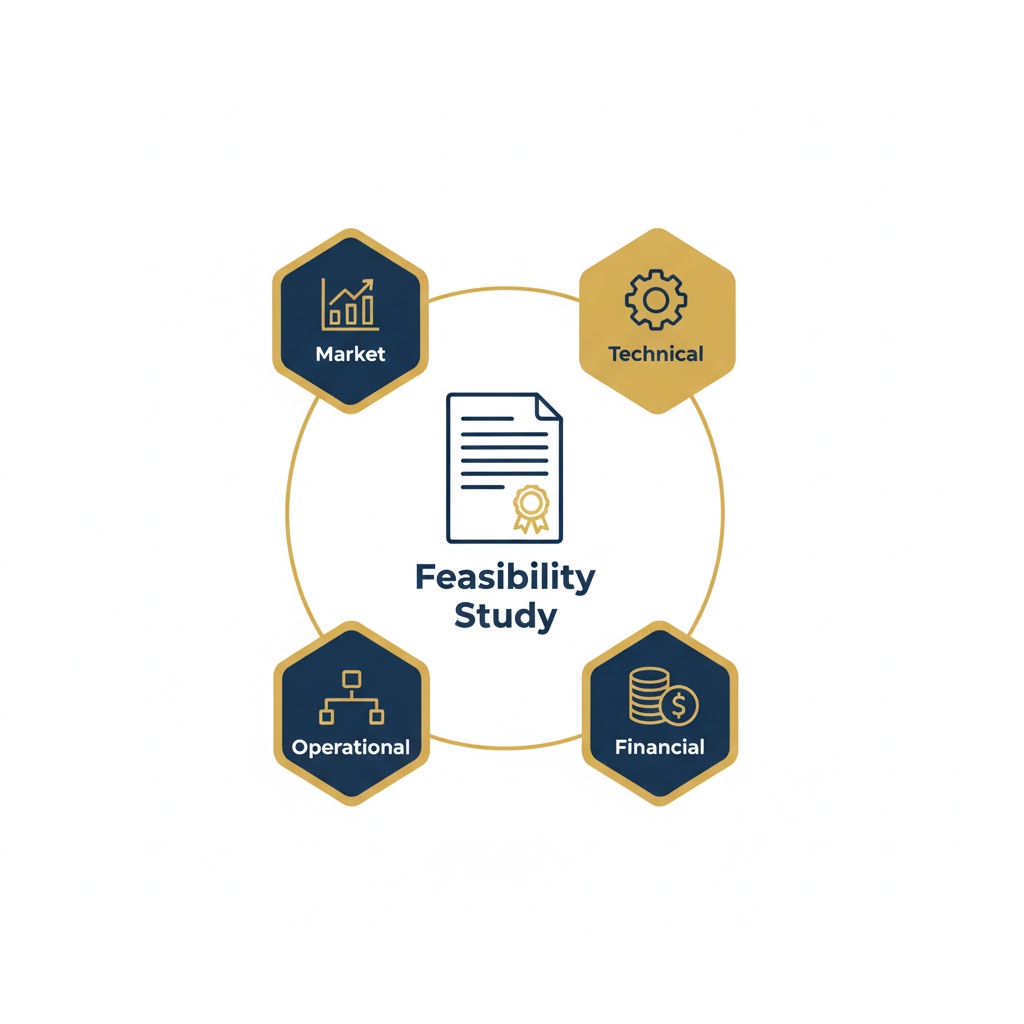
Effective feasibility studies follow a structured methodology that examines multiple dimensions of investment opportunities. The executive summary provides a high-level overview of findings and recommendations, allowing busy executives to quickly grasp key insights. However, the real value lies in the detailed analysis that supports these conclusions.
Market analysis forms the foundation of any quality feasibility study. This section examines market size, growth trends, segmentation, and demand drivers. In African markets, this analysis must account for both formal and informal economic activity, as official statistics often underestimate true market potential. Additionally, demographic trends, urbanization patterns, and changing consumer preferences provide crucial context for market projections.
Competitive landscape assessment identifies existing players, their market shares, strengths, and weaknesses. This intelligence helps investors understand how to differentiate their offerings and identify potential partnership opportunities. Furthermore, analyzing competitor strategies reveals market dynamics that might not be apparent from demand-side analysis alone.
Operational feasibility examines the practical aspects of establishing and running a business. This includes supply chain analysis, infrastructure requirements, technology needs, and human resource availability. In many African markets, operational challenges represent significant barriers to entry that require creative solutions and realistic budgeting.
Financial projections translate market opportunities into concrete numbers. Revenue forecasts, cost structures, profitability timelines, and return on investment calculations help investors evaluate whether opportunities meet their financial objectives. Sensitivity analysis shows how different scenarios might impact returns, providing a realistic range of potential outcomes.
Regulatory and legal analysis ensures compliance with local laws and identifies potential policy risks. Africa’s regulatory environments vary dramatically by country and sector, making this component essential. Understanding licensing requirements, tax implications, foreign ownership restrictions, and repatriation rules prevents costly legal problems down the road.
Market Entry Strategy: Navigating Africa’s Diverse Economies
Developing an effective market entry strategy requires deep understanding of target markets’ unique characteristics. Africa isn’t a monolithic market but rather a collection of distinct economies at different development stages. Consequently, strategies that work in South Africa may prove ineffective in Tanzania or Ghana.
Entry mode selection represents a critical strategic decision. Options include greenfield investments, acquisitions, joint ventures, franchising, or licensing arrangements. Each approach carries different risk profiles, capital requirements, and control levels. Market feasibility studies help investors evaluate which entry mode best suits their objectives and resources.
Timing considerations significantly impact investment success. Entering too early means educating markets and developing infrastructure without immediate returns. Entering too late means facing established competitors with loyal customer bases. Professional market analysis identifies the optimal entry window when market readiness intersects with competitive positioning.
Localization strategies determine how products or services adapt to local preferences and constraints. African consumers have specific needs shaped by climate, culture, income levels, and available infrastructure. Moreover, successful investors recognize that solutions designed for Western markets rarely transplant directly without modification.
Partnership strategies often accelerate market entry and reduce risks. Local partners bring market knowledge, distribution networks, regulatory expertise, and cultural understanding. However, selecting the right partners requires thorough due diligence to ensure aligned interests and complementary capabilities. Feasibility studies should identify potential partners and evaluate their suitability.
Investment Risk Assessment and Mitigation
Risk assessment forms a critical component of market feasibility reporting services Africa, as the continent presents unique risk profiles that require specialized evaluation. Political risks, including government instability, policy changes, and expropriation concerns, vary significantly across African countries. Professional feasibility studies assess these risks using political economy analysis and scenario planning.
Economic risks encompass currency volatility, inflation, interest rate fluctuations, and economic policy uncertainty. Many African currencies experience significant fluctuations against major international currencies, impacting investment returns. Therefore, feasibility reports must model currency risk and identify hedging strategies to protect investor returns.
Operational risks relate to supply chain disruptions, infrastructure limitations, and skilled labor shortages. Power reliability, transportation networks, and telecommunications infrastructure vary dramatically across African markets. Consequently, operational feasibility analysis must realistically assess these constraints and factor them into project timelines and budgets.
Market risks involve demand uncertainties, competitive threats, and changing consumer preferences. African consumer markets evolve rapidly as incomes rise and digital connectivity expands. Regular market intelligence helps investors stay ahead of these changes rather than being surprised by shifting market dynamics.
Reputational risks have become increasingly important as consumers, regulators, and civil society scrutinize corporate behavior more closely. Environmental impacts, labor practices, community engagement, and ethical standards all affect business sustainability. Comprehensive feasibility studies incorporate stakeholder analysis to identify and address potential reputational concerns proactively.
Sector-Specific Feasibility Analysis Across African Markets
Different economic sectors require specialized analytical approaches that account for unique dynamics and success factors. Agricultural investments, for instance, must evaluate soil quality, water availability, climate patterns, and value chain infrastructure. Africa’s agricultural potential remains largely untapped, but success requires understanding local farming practices, market access challenges, and post-harvest loss issues.
Technology and telecommunications sectors experience rapid growth driven by increasing smartphone penetration and improving connectivity. Feasibility studies in this space must assess regulatory frameworks, competitive intensity, consumer adoption patterns, and payment system development. Moreover, understanding the role of mobile money and digital financial services proves essential for technology ventures.
Manufacturing opportunities arise from Africa’s growing consumer markets and preferential trade agreements. However, feasibility analysis must honestly assess input costs, logistics challenges, utility reliability, and labor productivity. Industrial parks and special economic zones offer potential solutions to infrastructure constraints, but location decisions significantly impact operational viability.
Renewable energy projects benefit from Africa’s abundant solar, wind, and hydro resources. Yet, power purchase agreements, grid connection policies, and financing structures require careful evaluation. Energy sector feasibility studies must navigate complex regulatory environments and assess both technical and commercial viability.
Healthcare and education sectors offer compelling social impact investment opportunities. Nevertheless, business model innovation becomes necessary to serve low-income populations profitably. Feasibility analysis should examine pricing strategies, distribution models, quality standards, and regulatory requirements specific to these sensitive sectors.
The Role of Data-Driven Decision Making in African Investments

Data-driven decision making transforms investment outcomes by replacing assumptions with evidence. However, African markets present unique data challenges, including limited official statistics, informal economic activity, and rapidly changing conditions. Professional market feasibility reporting services Africa overcome these challenges through primary research, proprietary databases, and innovative data collection methodologies.
Primary research involves collecting original data directly from target markets through surveys, interviews, focus groups, and observations. This approach proves especially valuable in African contexts where secondary data may be outdated, incomplete, or unreliable. Moreover, primary research captures nuances that aggregated statistics miss, such as consumer preferences, purchasing behaviors, and decision-making processes.
Secondary research synthesizes existing data from government agencies, industry associations, academic institutions, and commercial databases. While African secondary data has limitations, skilled researchers know how to triangulate multiple sources to build reliable market pictures. Additionally, regional and international organizations provide valuable comparative data across African countries.
Technology enables more sophisticated data collection and analysis. Mobile surveys reach dispersed populations cost-effectively, while satellite imagery monitors agricultural production, urban development, and infrastructure projects. Furthermore, social media analytics and digital footprint analysis reveal consumer sentiments and trending topics in real-time.
Predictive analytics and modeling help investors anticipate future market conditions rather than simply describing current situations. By identifying patterns and trends in historical data, analysts can project market growth, competitive dynamics, and consumer adoption rates. However, models must be calibrated to African market realities rather than blindly applying frameworks developed elsewhere.
How On-Demand Reporting Services Save Time and Resources
Traditional feasibility studies often require months to complete and cost hundreds of thousands of dollars. This timeline and expense make comprehensive market research inaccessible for many investors, particularly small and medium enterprises. On-demand market feasibility reporting services Africa democratize access to professional market intelligence by offering flexible, scalable options.
Modular report structures allow investors to purchase only the analysis components they need. Rather than commissioning full-scale studies, clients can request specific sections such as competitive analysis, regulatory review, or financial modeling. This targeted approach reduces costs while still providing critical insights for decision-making.
Technology platforms streamline research processes and accelerate delivery timelines. Cloud-based collaboration tools enable real-time communication between researchers and clients, ensuring alignment throughout projects. Additionally, automated data collection and analysis tools reduce manual effort, lowering costs without sacrificing quality.
Subscription models provide ongoing market intelligence rather than one-time reports. This approach keeps investors informed about changing market conditions, emerging competitors, and new opportunities. Regular updates prove especially valuable in fast-moving African markets where yesterday’s insights quickly become obsolete.
Expert networks connect investors with local specialists who provide on-the-ground insights. These networks include industry practitioners, former regulators, academic experts, and experienced entrepreneurs. Consequently, investors access nuanced, contextual knowledge that pure desk research cannot provide.
Competitive Intelligence and Market Positioning
Understanding competitive dynamics enables investors to develop differentiated strategies that create sustainable advantages. Competitive intelligence goes beyond identifying who competitors are to understanding their strategies, capabilities, strengths, and vulnerabilities. This intelligence informs everything from product development to pricing strategies to marketing approaches.
Market positioning determines how target customers perceive offerings relative to alternatives. In African markets, positioning must account for price sensitivity, quality expectations, brand awareness, and distribution channel preferences. Moreover, positioning strategies often differ significantly across countries and consumer segments within the continent.
Competitor benchmarking provides concrete performance metrics for evaluating investment proposals. By understanding industry norms for profitability, growth rates, market shares, and operational efficiency, investors set realistic expectations. Furthermore, benchmarking identifies best practices that can be adopted and common pitfalls that should be avoided.
Value chain analysis reveals opportunities for competitive advantage at different production and distribution stages. African markets often have fragmented, inefficient value chains that create opportunities for innovative business models. Disintermediation, quality improvement, or logistics optimization can generate significant value while serving markets better.
Emerging competitor monitoring helps investors anticipate future competitive threats. African markets attract increasing attention from global corporations, regional champions, and local startups. Early identification of emerging competitors allows proactive strategy adjustments rather than reactive responses after markets become crowded.
Regulatory Environment and Compliance Analysis
Navigating Africa’s diverse regulatory landscapes represents a critical success factor for investors. Each country has unique legal frameworks governing business formation, foreign investment, taxation, labor relations, and sector-specific operations. Consequently, comprehensive regulatory analysis forms an essential component of market feasibility reporting services Africa.
Investment incentives and restrictions vary dramatically across African countries. Some nations actively court foreign investment through tax holidays, duty exemptions, and streamlined approval processes. Others impose foreign ownership limits, local content requirements, or capital controls that constrain investment options. Understanding these policies upfront prevents costly surprises during implementation.
Licensing and permitting requirements often involve multiple government agencies with overlapping jurisdictions. Navigating bureaucratic processes requires patience, local knowledge, and sometimes professional facilitation services. Feasibility studies should map approval processes, identify key stakeholders, and estimate realistic timelines for obtaining necessary authorizations.
Tax structures significantly impact investment returns and require careful planning. Corporate income taxes, value-added taxes, withholding taxes, and customs duties all affect profitability. Additionally, tax treaties, transfer pricing rules, and incentive schemes create optimization opportunities that sophisticated investors exploit within legal boundaries.
Labor laws govern employment relationships, minimum wages, working conditions, and termination procedures. African labor markets often feature skills mismatches, where educated workers lack practical experience while vocational training remains underdeveloped. Employment feasibility analysis should assess labor availability, cost, productivity, and regulatory compliance requirements.
Intellectual property protection varies in enforcement effectiveness across African jurisdictions. While most countries have modern IP laws on paper, practical enforcement may be weak. Investors in technology, brands, or proprietary processes need realistic assessments of IP protection and strategies for safeguarding competitive advantages.
Financial Projections and ROI Modeling
Financial modeling translates market opportunities into investment returns that stakeholders can evaluate. Robust financial projections balance optimism with realism, providing honest assessments of revenue potential, cost structures, profitability timelines, and capital requirements. Moreover, sensitivity analysis shows how changing assumptions impact returns, giving investors range-bound expectations rather than false precision.
Revenue forecasting begins with market sizing and share assumptions. African market data limitations mean revenue projections require triangulation from multiple sources and methodologies. Conservative base cases, realistic mid cases, and optimistic upside scenarios help investors understand potential outcomes under different conditions.
Cost structures in African operations often differ from Western benchmarks due to infrastructure constraints, import dependencies, and productivity levels. Feasibility studies must ground cost assumptions in local realities rather than extrapolating from other markets. Hidden costs like security, generators, or expatriate housing can significantly impact profitability if not properly anticipated.
Working capital requirements frequently exceed initial expectations in African markets. Longer payment cycles, inventory inefficiencies, and limited trade financing options tie up capital that financial models must account for. Insufficient working capital causes many otherwise viable businesses to fail when cash flow doesn’t match projections.
Return on investment calculations should reflect true investment horizons and exit strategies. African investments often require longer timeframes to achieve profitability than comparable ventures in developed markets. Patient capital that can weather initial challenges often reaps substantial rewards, but investors need realistic expectations about return timelines.
Scenario planning examines how different future conditions affect financial outcomes. Political changes, commodity price swings, currency movements, or competitive responses all create uncertainties that single-point forecasts cannot capture. Multiple scenarios with assigned probabilities provide more useful decision-making frameworks than deterministic models.
Case Studies: Successful Market Entry Using Feasibility Reports
Real-world examples illustrate how market feasibility reporting services Africa enable investment success. A European consumer goods company considered entering West African markets but lacked regional expertise. Comprehensive feasibility studies revealed that Nigeria offered the largest immediate opportunity but required local manufacturing to overcome import tariffs and currency volatility. Meanwhile, Ghana presented a more business-friendly environment suitable for a regional distribution hub serving smaller markets.
Armed with these insights, the company established manufacturing in Nigeria while basing regional operations in Ghana. This two-country strategy balanced market access with operational efficiency. Within three years, the investment achieved profitability and positioned the company for further African expansion. Without thorough feasibility analysis, the company might have attempted a single-country approach that would have missed important strategic considerations.
A renewable energy developer sought to build solar installations across East Africa. Initial assessments suggested Kenya as the obvious choice given its relatively developed economy. However, detailed feasibility studies revealed that Tanzania offered better power purchase agreement terms, while Uganda had underserved rural markets willing to pay premium prices for reliable electricity. The developer pursued a diversified portfolio across all three countries, reducing risk while capturing different opportunity types.
An agricultural processing startup wanted to produce value-added food products for urban African consumers. Market research identified growing middle-class demand for convenient, quality-assured foods. Feasibility analysis highlighted that sourcing high-quality raw materials consistently posed the biggest operational challenge. The company addressed this by integrating backward into farming through outgrower schemes, ensuring supply reliability while creating positive social impact.
A fintech company planned to launch digital financial services across sub-Saharan Africa. Competitive intelligence revealed that mobile money platforms had already established strong market positions in many countries. Rather than competing head-on, feasibility studies identified underserved niches like business-to-business payments and savings products. This focused strategy allowed the startup to gain traction before expanding into more competitive product categories.
These examples demonstrate how quality market intelligence shapes successful strategies. Investors who skip feasibility analysis or rely on superficial research often discover critical issues too late. Conversely, those who invest in comprehensive market understanding make better decisions, implement more effectively, and achieve superior returns.
Choosing the Right Consulting Partner for Your Investment

Selecting the right consulting partner significantly impacts the value derived from market feasibility reporting services Africa. Not all consulting firms possess equal capabilities, particularly regarding African market expertise. Investors should evaluate potential partners across multiple dimensions before committing to relationships.
African market experience stands as the most critical selection criterion. Consultants who primarily work in developed markets often misapply frameworks that don’t translate to African contexts. Look for firms with demonstrated track records conducting research across multiple African countries and sectors. Case studies, client references, and published thought leadership provide evidence of genuine expertise.
Local presence and networks provide advantages that purely international firms cannot match. While global consulting brands offer prestige, boutique firms with deep African roots often deliver superior insights. Local consultants understand cultural nuances, have relationships with key stakeholders, and can conduct research more efficiently than foreign teams parachuting in for short engagements.
Methodological rigor ensures that findings rest on solid analytical foundations rather than superficial observations. Request sample reports to evaluate research methodologies, data sources, and analytical frameworks. Quality consulting firms transparently explain their approaches and provide detailed documentation supporting conclusions.
Industry specialization matters when evaluating sector-specific opportunities. Generalist consultants may understand broad market dynamics but lack the technical knowledge required for industries like healthcare, agriculture, or manufacturing. Specialized consultants bring deep domain expertise that identifies opportunities and risks that generalists miss.
Service flexibility allows investors to scale engagement scope based on needs and budgets. The best consulting partners offer modular services ranging from quick market assessments to comprehensive feasibility studies. This flexibility ensures that investors access appropriate intelligence levels without paying for unnecessary analysis.
Communication and collaboration styles affect project experiences and outcomes. Consulting relationships work best when firms act as thought partners rather than distant service providers. Look for consultants who ask probing questions, challenge assumptions constructively, and communicate clearly throughout engagements. Cultural fit and working style compatibility contribute to productive partnerships.
Novatia Consulting (www.novatiaconsulting.com) exemplifies these qualities through its specialized focus on African markets, combining international standards with local expertise. The firm delivers actionable insights that empower investors to navigate Africa’s opportunities confidently.
Technology and Tools in Modern Market Research
Technology has revolutionized market research capabilities, enabling faster, more accurate, and more cost-effective analysis. Digital tools overcome traditional research limitations while opening new avenues for understanding African markets. However, technology complements rather than replaces human expertise and judgment.
Online surveys reach respondents across geographic areas quickly and inexpensively. Mobile-first survey platforms work particularly well in Africa where smartphone adoption outpaces computer ownership. Nevertheless, survey design requires expertise to avoid bias and ensure representative samples. Technology facilitates data collection, but skilled researchers still must interpret findings correctly.
Social media analytics reveal consumer sentiments, trending topics, and brand perceptions in real-time. African social media adoption has exploded, creating rich data sources about consumer preferences and behaviors. Sentiment analysis algorithms process thousands of social posts to identify patterns that manual analysis would miss. However, social media users may not represent broader populations, requiring careful interpretation.
Geospatial analysis using satellite imagery and GPS data provides objective measurements of economic activity. Researchers can track urbanization, agricultural production, infrastructure development, and retail store locations without relying on potentially outdated official statistics. These tools prove especially valuable in markets with limited traditional data sources.
Web scraping extracts publicly available online data for competitive intelligence and market monitoring. Automated tools can track competitor pricing, product offerings, and marketing messages at scale. This continuous monitoring detects market changes faster than periodic manual research. Nevertheless, legal and ethical considerations govern what data can be collected and how it can be used.
Predictive analytics and artificial intelligence identify patterns in complex datasets that human analysts might overlook. Machine learning algorithms can forecast demand, segment customers, and optimize pricing strategies. However, AI models require substantial training data and can perpetuate biases present in historical information. Human oversight remains essential for validating AI-generated insights.
Data visualization platforms transform complex datasets into intuitive graphics that communicate findings effectively. Interactive dashboards allow investors to explore data from multiple angles, drilling down into specific markets or segments of interest. Good visualization makes research insights accessible to diverse stakeholders regardless of technical backgrounds.
Future Trends in African Market Analysis
African markets continue evolving rapidly, requiring market feasibility reporting services Africa to adapt methodologies and focus areas. Several trends will shape investment research in coming years, creating both challenges and opportunities for investors and consultants.
Digital transformation accelerates across African economies, fundamentally changing how businesses operate and consumers behave. Market research must increasingly account for e-commerce adoption, digital payments, social media influence, and platform business models. Traditional brick-and-mortar assumptions become less relevant as African consumers leapfrog directly to mobile-first experiences.
Regional integration through the African Continental Free Trade Area (AfCFTA) creates pan-African opportunities that didn’t previously exist. Feasibility studies increasingly need continental rather than country-specific perspectives. Understanding harmonized regulations, reduced tariffs, and integrated supply chains becomes essential for investors planning regional strategies.
Climate change impacts require deeper environmental analysis in feasibility studies. Agricultural investments must account for changing rainfall patterns, temperature increases, and extreme weather events. Meanwhile, climate adaptation and mitigation create new investment opportunities in renewable energy, water management, and sustainable agriculture that need specialized evaluation frameworks.
Youth demographics drive innovation and entrepreneurship across Africa. With the world’s youngest population, African markets increasingly reflect preferences and behaviors of digitally-native consumers. Feasibility studies must incorporate insights about youth aspirations, digital literacy, and social consciousness that differ from previous generations.
Impact measurement grows in importance as investors seek financial returns alongside social and environmental benefits. Feasibility studies increasingly incorporate ESG (Environmental, Social, Governance) analysis and impact projections. Frameworks for measuring social outcomes, carbon footprints, and governance standards become standard components of investment evaluation.
Real-time market intelligence replaces static reports as the gold standard. Investors expect continuous monitoring of markets, competitors, and trends rather than periodic studies. Subscription-based intelligence services and automated alerting systems provide ongoing situational awareness that enables agile strategy adjustments.
Artificial intelligence enhances research capabilities while raising questions about human expertise roles. AI can process vast data quantities and identify patterns, but context interpretation, stakeholder engagement, and strategic recommendations still require human judgment. The most effective research combines technological capabilities with experienced human analysts.
Conclusion
Market feasibility reporting services Africa have become indispensable tools for investors navigating the continent’s complex, dynamic opportunities. Comprehensive feasibility studies reduce investment risks, identify optimal strategies, and improve returns by replacing assumptions with evidence-based insights. As African markets continue evolving rapidly, professional market intelligence provides the foundation for successful decision-making.
The key to investment success lies in understanding that Africa isn’t a single market but a diverse collection of economies, each with unique characteristics. What works in one country may fail in another, making localized, nuanced analysis essential. On-demand reporting services provide the flexibility to access targeted insights when needed, without the delays and costs of traditional research approaches.
Investors who prioritize quality market intelligence position themselves for success in Africa’s growth story. Partnering with experienced consulting firms like Novatia Consulting ensures access to deep market expertise, robust methodologies, and actionable recommendations. While feasibility studies require upfront investment, the costs pale compared to losses from poorly informed decisions or missed opportunities.
Africa’s investment landscape will continue presenting extraordinary opportunities for those who approach markets with proper preparation and realistic expectations. Market feasibility reporting services Africa provide the knowledge foundation that transforms potential into profitable reality. As the continent’s economic transformation accelerates, informed investors who understand markets deeply will capture disproportionate returns.
The question isn’t whether to invest in market intelligence but rather how quickly you can leverage professional insights to gain competitive advantages. Every day without clear market understanding represents lost opportunities or unrecognized risks. Begin your investment journey with comprehensive feasibility analysis that sets the stage for long-term success across African markets.
Frequently Asked Questions (FAQs)
What is a market feasibility study for African investments? A market feasibility study evaluates whether a business opportunity or investment in Africa is viable by analyzing market demand, competition, regulations, and financial projections. These studies provide data-driven insights that help investors make informed decisions and reduce risks.
How long does a feasibility report take to complete? On-demand market feasibility reporting services Africa typically deliver results in 2-6 weeks depending on scope and complexity. Traditional comprehensive studies may take 2-3 months, while targeted assessments can be completed in days for urgent decisions.
Why do I need professional feasibility services instead of doing research myself? Professional consultants bring specialized African market expertise, established local networks, proven methodologies, and objective analysis that individual investors typically lack. They identify risks and opportunities that inexperienced researchers commonly miss, ultimately saving time and money.
What sectors benefit most from feasibility studies in Africa? All sectors benefit from thorough market analysis, but agriculture, technology, manufacturing, renewable energy, and consumer goods particularly require specialized feasibility assessment due to Africa’s unique operational challenges and rapidly evolving market dynamics.
How much do market feasibility reporting services cost? Costs vary based on scope, geography, and depth of analysis, ranging from $5,000 for focused assessments to $50,000+ for comprehensive multi-country studies. On-demand modular services offer flexible pricing that matches specific investor needs and budgets.
Can feasibility studies help secure investment funding? Yes, professional feasibility reports significantly improve funding prospects by demonstrating thorough due diligence, realistic projections, and risk awareness. Investors, banks, and development finance institutions require quality feasibility studies before committing capital to African projects.
What makes African market research different from other regions? African markets require specialized approaches due to limited data availability, diverse regulatory environments, informal economies, infrastructure constraints, and rapid change. Standard research methodologies developed elsewhere often miss critical local context and nuances.
How often should I update my market intelligence for African investments? African markets evolve rapidly, so annual updates minimum are recommended for established investments. Fast-changing sectors like technology may require quarterly monitoring, while on-demand reporting services provide continuous intelligence for dynamic decision-making.
What information do I need to provide for a feasibility study? Consultants typically need your investment objectives, target markets, budget parameters, timeline expectations, and any existing market knowledge. The more context you provide about strategic goals and constraints, the more tailored and valuable the feasibility assessment becomes.
How do I choose between different African countries for investment? Comprehensive feasibility studies compare target countries across market size, growth potential, regulatory environment, competitive intensity, operational feasibility, and risk factors. This systematic evaluation identifies which markets best align with your investment objectives and capabilities.
Related posts:
 Feasibility Assessment of E-commerce Business in Nigeria’s Urban Centers
 Risk Analysis in Feasibility Studies: Lessons from Large-Scale African Projects
 Economic Feasibility Study in Nigeria: Your Complete Guide to Infrastructure Investment Success
 Feasibility Study Requirements for Nigerian Bank Loans: Your Complete Approval Guide