


Nigeria’s manufacturing sector stands at a critical crossroads. As the government intensifies efforts toward industrial diversification and import substitution, manufacturing startups are increasingly positioned as key drivers of economic growth. However, many promising ventures struggle—not due to a lack of vision or market demand, but because of poor financial planning and the absence of effective financial modeling. This comprehensive guide highlights the urgent need for accurate financial modeling and NPV analysis tailored specifically to the realities facing Nigerian manufacturing startups.
Understanding Financial Modeling for Startups in Nigeria: A Foundational Guide
Financial modeling for startups in Nigeria requires a deep understanding of both global best practices and local market realities. Think of a financial model as your startup’s GPS—it shows where you are, where you’re going, and helps you navigate the inevitable detours along the way. For Nigerian manufacturing startups, this becomes even more critical given the unique challenges of operating in an emerging market with infrastructure gaps, foreign exchange volatility, and varying regulatory frameworks.
A well-constructed financial model serves multiple purposes beyond just number-crunching. It becomes your communication tool with investors, your decision-making framework for strategic choices, and your early warning system for potential cash flow crises. The model should reflect Nigeria-specific factors such as import duty implications, local sourcing opportunities, and the impact of currency fluctuations on both revenue and costs. Many Nigerian entrepreneurs underestimate the importance of building scenarios that account for power costs, logistics challenges, and the seasonal nature of consumer spending in the local market.
The foundation of any solid financial model lies in understanding your value proposition and translating it into quantifiable metrics. This means moving beyond wishful thinking to create realistic assumptions based on market research, pilot programs, and comparable company analysis within the Nigerian context. Your model should be sophisticated enough to impress investors yet simple enough that you can explain every assumption to your grandmother. Remember, complexity doesn’t equal accuracy—the best models are those that capture the essential drivers of your business while remaining flexible enough to adapt as you learn more about your market.
Why Nigerian Manufacturing Startups Need Strong Financial Models to Scale
The harsh reality is that most manufacturing startups in Nigeria operate on gut feeling rather than data-driven financial planning. This approach might work for small-scale operations, but scaling requires precision. Consider the case of a young entrepreneur who started a furniture manufacturing business in Lagos with initial success selling to friends and family. When orders started pouring in from retailers across Nigeria, the lack of proper financial modeling led to accepting contracts that seemed profitable but actually drained cash flow due to inadequate working capital planning.
Manufacturing businesses are capital-intensive by nature, and in Nigeria’s challenging business environment, the margin for error shrinks significantly. You’re dealing with longer cash conversion cycles, higher inventory holding costs due to supply chain uncertainties, and the constant pressure of foreign exchange fluctuations on imported raw materials. Without a robust financial model, you’re essentially flying blind—unable to determine optimal pricing strategies, assess the true profitability of different product lines, or plan for the substantial working capital requirements that come with scaling manufacturing operations.
Strong financial models also serve as your credibility passport when approaching investors or lenders. Nigerian investors have become increasingly sophisticated, and they expect to see detailed financial projections backed by solid assumptions. Your model demonstrates that you understand your business economics, have thought through potential risks, and have a clear path to profitability. More importantly, it shows that you can be trusted with their money because you’ve done the hard work of understanding exactly how that money will be used to generate returns.
How to Create Financial Model for Nigerian Startups: Step-by-Step Breakdown
Building a comprehensive financial model for your Nigerian manufacturing startup doesn’t require an MBA in finance, but it does demand methodical thinking and attention to detail. Start with your revenue model—break down exactly how your business makes money. For manufacturing startups, this typically involves unit economics: how many units can you produce, at what cost, and for what selling price? But don’t stop there. Factor in capacity constraints, seasonal demand patterns, and the reality that your first year’s production capacity might be significantly different from your third year’s optimized operations.
The next critical step involves mapping your cost structure with Nigerian market specifics in mind. Direct materials might include both locally sourced and imported components, each with different cost behaviors and risk profiles. Labor costs should reflect not just base salaries but also the various statutory contributions required by Nigerian law. Don’t forget about the hidden costs that catch many entrepreneurs off guard: generator fuel costs, security expenses, and the premium you’ll pay for reliable logistics services. Your model should also account for the reality that achieving optimal capacity utilization takes time—most manufacturing startups operate at 40-60% capacity in their first year.
Cash flow modeling becomes especially crucial in the Nigerian context where working capital management can make or break your business. Build detailed monthly cash flow projections that account for the timing mismatches between when you invest in inventory, when you deliver products, and when you actually collect payment. Include scenarios for different payment terms with customers, varying supplier credit arrangements, and the impact of foreign exchange rate changes on your cash position. Your model should be dynamic enough to answer questions like: “What happens to our cash flow if the naira depreciates by 15%?” or “How would a three-month delay in a major customer payment affect our operations?”
NPV Analysis for Manufacturing Businesses in Nigeria: What Investors Expect
Net Present Value analysis for manufacturing businesses in Nigeria requires careful consideration of discount rates that reflect both the risk profile of manufacturing investments and the unique challenges of the Nigerian business environment. Investors typically expect to see NPV calculations using discount rates between 18-25% for manufacturing startups, significantly higher than what you might use in more stable economies. This reflects currency risk, regulatory uncertainty, infrastructure challenges, and the higher baseline risk associated with startup ventures.
Your NPV analysis should present multiple scenarios that acknowledge the inherent uncertainty in startup projections. The base case should represent your most realistic assessment of business performance, while upside and downside scenarios test the sensitivity of returns to key variables. Investors want to see that you understand which factors most significantly impact your business value—whether it’s raw material costs, production capacity utilization, or market pricing power. A well-constructed sensitivity analysis might show, for instance, that a 10% increase in raw material costs reduces NPV by 15%, while a similar increase in selling prices improves NPV by 25%.
The time horizon for your NPV analysis should align with typical investor expectations while being realistic about the manufacturing business lifecycle. Most investors look for a clear path to positive cash flows within 2-3 years and significant value creation over a 5-7 year period. Your analysis should explicitly account for the substantial upfront capital requirements of manufacturing businesses and show how economies of scale will improve unit economics over time. Remember that investors are not just evaluating your current NPV—they’re assessing your ability to create multiple expansion options that could drive additional value creation beyond your initial projections.
Common Financial Modeling Mistakes Nigerian Entrepreneurs Should Avoid
One of the most dangerous mistakes Nigerian entrepreneurs make is building overly optimistic models that ignore local market realities. We’ve seen countless business plans projecting 50% annual growth rates without considering competitive responses, market saturation, or operational constraints. Reality check: if you’re projecting hockey stick growth, you better have data to support why your business will be the exception rather than the rule. Your model should pass the common sense test—if you’re claiming you’ll capture 10% of Nigeria’s furniture market in three years, explain exactly how you’ll achieve distribution across 36 states with your current resources.
Another critical error involves underestimating working capital requirements. Manufacturing businesses typically require 15-25% of revenue tied up in working capital, but many Nigerian entrepreneurs model this at 5-10% because they haven’t fully understood the cash conversion cycle. When you factor in the time needed to source materials, manufacture products, ship to customers, and collect payments, you’ll realize that rapid growth actually increases cash requirements rather than generating immediate cash. This miscalculation has killed more manufacturing startups than any other single factor.
Currency exposure modeling represents another common blind spot. Many entrepreneurs model their businesses in naira but fail to properly account for the fact that significant portions of their cost base (machinery, spare parts, key raw materials) are effectively dollar-denominated. Your model should explicitly show how exchange rate movements affect both your cost structure and pricing power. If 40% of your costs are tied to foreign exchange rates but your revenue is entirely in naira, a 20% currency devaluation doesn’t just increase costs—it might make your business unviable unless you can pass through price increases to customers.
Key Metrics to Include in Financial Modeling for Startups in Nigeria
Manufacturing startups need to track metrics that go beyond traditional financial ratios to capture the operational realities of building a production business in Nigeria. Gross margin per unit tells only part of the story—you need to understand contribution margin after accounting for variable selling and logistics costs. In Nigeria’s challenging distribution environment, the cost to get your products to customers can be substantial and highly variable depending on location and order size. Your model should track fully-loaded unit economics that include everything from raw materials to final delivery.
Working capital efficiency metrics become critical given the cash flow challenges most manufacturing startups face. Track your cash conversion cycle carefully—how many days from purchasing raw materials to collecting cash from customers? In Nigeria’s business environment, this cycle can stretch significantly longer than in developed markets due to payment delays and supply chain complexities. Your model should also monitor inventory turnover rates by product category, as slow-moving inventory can quickly drain cash resources.
Capacity utilization and operational efficiency metrics help you understand the scalability of your business model. Track production capacity utilization monthly, along with key operational metrics like setup times, waste rates, and labor productivity. These operational metrics directly drive your financial performance and help identify when you’ll need to invest in additional capacity. Your financial model should link these operational drivers to financial outcomes, showing how improvements in capacity utilization or waste reduction translate directly to improved profitability and cash generation.
How Novatia Consulting Supports Manufacturing Startups with NPV Analysis
At Novatia Consulting, we understand that manufacturing startups need more than just theoretical financial models—they need practical tools that help them make better business decisions every day. Our approach to NPV analysis goes beyond traditional spreadsheet modeling to create dynamic tools that startups can use to evaluate expansion opportunities, assess new product lines, and optimize pricing strategies. We work closely with entrepreneurs to build models that reflect the specific challenges and opportunities within Nigerian manufacturing sectors, from food processing to textile production to automotive components.
Our team brings deep experience in both financial modeling and Nigerian market realities, having worked with over 200 manufacturing startups across various sectors. We help entrepreneurs identify the key value drivers in their business and build sensitivity analyses that show exactly which factors most significantly impact long-term value creation. This isn’t just about creating pretty spreadsheets—it’s about building decision-making frameworks that help entrepreneurs navigate the constant trade-offs involved in scaling manufacturing operations.
What sets our approach apart is the focus on actionable insights rather than just numbers. We help startups understand not just what their NPV is, but what specific actions they can take to improve it. This might involve optimizing their product mix to focus on higher-margin items, identifying opportunities to reduce working capital requirements, or developing strategies to mitigate currency risk exposure. Our clients consistently report that the modeling process itself helps them think more strategically about their business and make more informed decisions about resource allocation.
Creating Realistic Revenue Projections for Nigerian Manufacturing Startups
Building realistic revenue projections for manufacturing startups requires a bottom-up approach that accounts for production constraints, market development timelines, and the realities of customer acquisition in Nigeria’s business environment. Start by understanding your total addressable market, but then apply realistic market penetration rates based on your go-to-market strategy and competitive positioning. If you’re targeting the retail market, factor in the time required to build relationships with distributors and the seasonal patterns that affect consumer spending across different regions of Nigeria.
Production capacity constraints play a crucial role in revenue projections that many entrepreneurs overlook. Your revenue growth can’t exceed your ability to produce and deliver products, yet we regularly see business plans that show revenue doubling year-over-year without corresponding investments in production capacity. Build your revenue model around realistic production capacity expansion plans, accounting for the lead times required to source and install equipment, train workers, and achieve optimal operating efficiency.
Customer concentration risk requires careful consideration in your revenue projections. While landing a major customer might seem like the path to rapid growth, depending too heavily on a few large customers creates significant risk in your projections. Model different customer acquisition scenarios and show how your revenue mix evolves over time. Include realistic assumptions about customer churn rates and the time required to replace lost customers. Your projections should demonstrate a path toward building a diversified customer base that reduces concentration risk while supporting sustainable growth.
Cost Structure Modeling for Nigerian Manufacturing Ventures
Effective cost structure modeling for Nigerian manufacturing ventures requires granular understanding of both direct and indirect costs, with particular attention to the hidden costs that can significantly impact profitability. Direct material costs should be modeled with consideration for both local and imported components, including the impact of foreign exchange volatility on imported raw materials. Build scenarios that show how currency fluctuations affect your input costs and identify opportunities to hedge this risk through supplier arrangements or pricing strategies.
Labor cost modeling extends beyond base salaries to include the full range of statutory and voluntary benefits required in Nigeria’s employment landscape. Factor in not just current wage rates but realistic assumptions about wage inflation, productivity improvements over time, and the costs associated with training and retaining skilled workers. Many manufacturing startups underestimate the total cost of labor, including recruitment, training, benefits, and the productivity ramp-up period for new employees.
Infrastructure and operational costs often represent the largest surprise for manufacturing entrepreneurs in Nigeria. Power costs can consume 15-25% of total operating expenses for energy-intensive manufacturing processes, while security, logistics, and telecommunications costs add additional layers of expense. Your cost model should include realistic assumptions about generator fuel costs, backup power requirements, and the premium costs associated with reliable logistics services. These aren’t optional costs—they’re essential for maintaining consistent operations in Nigeria’s challenging infrastructure environment.
The Role of Sensitivity Analysis in Financial Modeling for Startups in Nigeria
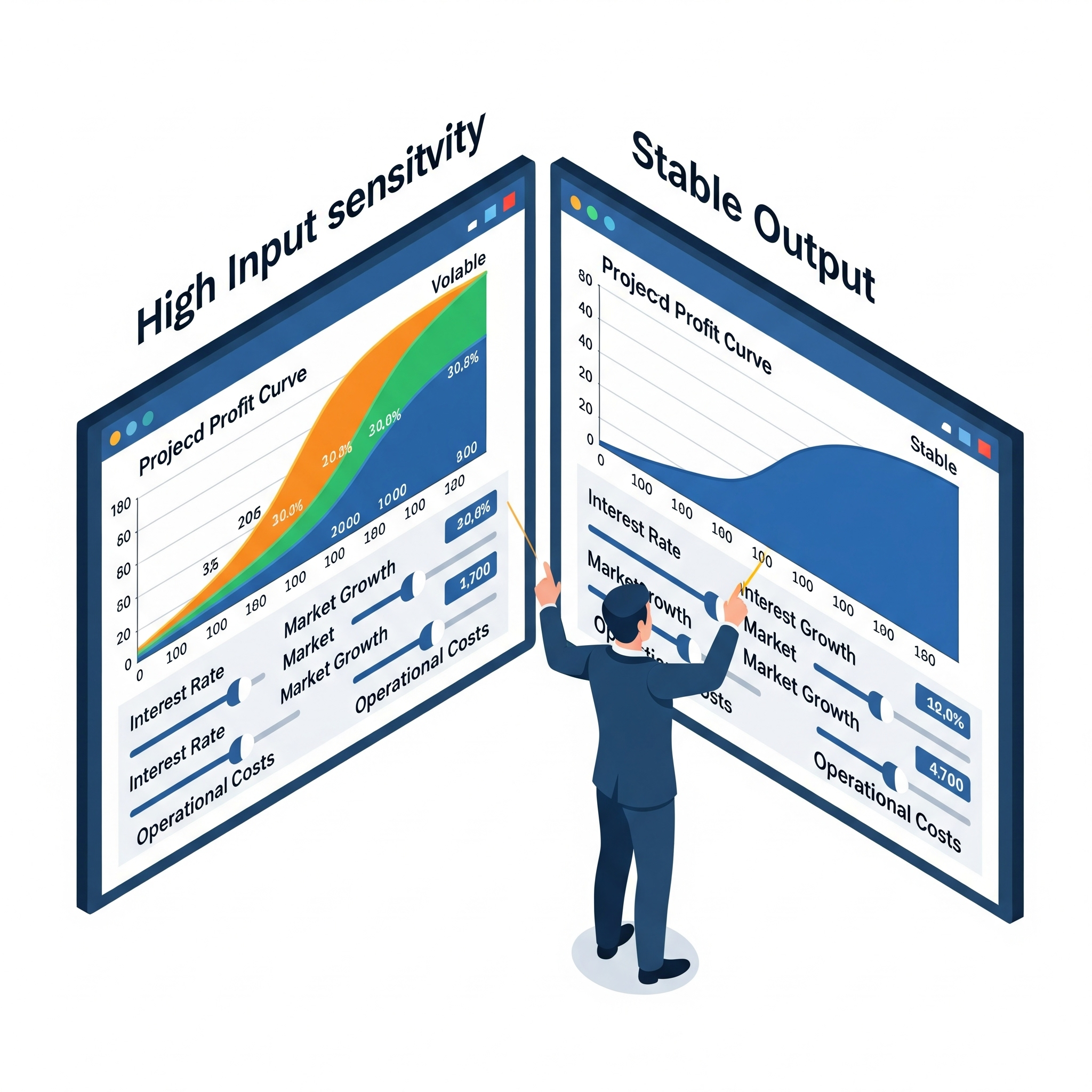
Sensitivity analysis transforms your financial model from a static projection into a powerful decision-making tool that helps you understand which variables most significantly impact your business performance. For Nigerian manufacturing startups, this analysis becomes even more critical given the numerous external factors that can affect business outcomes. Start by identifying the key variables in your business model—these might include raw material costs, production capacity utilization, selling prices, foreign exchange rates, and customer acquisition costs.
Build tornado diagrams that show the relative impact of different variables on your key output metrics like NPV, IRR, or break-even timeline. This visual representation helps you focus your management attention on the factors that matter most. For example, your analysis might reveal that a 10% improvement in capacity utilization has the same impact on profitability as a 5% reduction in raw material costs, helping you prioritize operational improvements over supplier negotiations.
Scenario modeling should include combinations of variables rather than just single-factor sensitivity tests. Create realistic scenarios that combine related factors—for instance, a currency devaluation scenario that affects both input costs and market demand, or an economic downturn scenario that impacts both customer payment terms and access to credit. These combined scenarios provide a more realistic assessment of potential risks and help you develop contingency plans for different business environments.
Strategic Use of NPV Analysis for Manufacturing Businesses in Nigeria
NPV analysis serves as more than just an investment evaluation tool—it becomes a strategic framework for making critical business decisions that shape your company’s future. For manufacturing businesses in Nigeria, this strategic application of NPV analysis helps evaluate expansion opportunities, assess new product development investments, and determine optimal timing for major capital expenditures. Each strategic decision should be evaluated not just on its standalone merits but on how it affects the overall value creation trajectory of your business.
Product line expansion decisions benefit significantly from rigorous NPV analysis that accounts for shared costs, capacity constraints, and market cannibalization effects. When evaluating whether to add a new product line, consider not just the direct revenue and costs but also how the new line affects your existing operations. Will it utilize excess capacity more efficiently? Does it strengthen your competitive position with key customers? Your NPV analysis should capture these strategic benefits alongside the direct financial impacts.
Geographic expansion decisions require NPV analysis that considers the unique costs and risks of operating in different Nigerian markets. Expanding from Lagos to Kano involves more than just transportation costs—it requires understanding regional customer preferences, distribution challenges, regulatory variations, and competitive dynamics. Your analysis should compare the NPV of serving new markets from existing facilities versus establishing local presence, considering factors like market size, competitive intensity, and operational complexity.
How to Create Financial Model for Nigerian Startups Using Local Market Data
Creating accurate financial models requires grounding your assumptions in solid local market data rather than generic industry benchmarks or international comparables. Start by gathering primary market research through customer interviews, pilot programs, and competitive analysis within your specific Nigerian market segment. This data should inform key assumptions about pricing power, customer acquisition costs, market penetration rates, and competitive responses to your market entry.
Cost benchmarking should draw from local suppliers, service providers, and comparable companies operating in similar conditions. Labor cost assumptions should reflect not just current market rates but also the availability of skilled workers in your specific location and industry segment. Raw material cost assumptions should account for both local sourcing opportunities and the realities of importing key components, including lead times, minimum order quantities, and quality considerations that affect your operational flexibility.
Market sizing and penetration rate assumptions should be based on detailed analysis of your target customer segments within the Nigerian market. This means understanding not just the total addressable market but also the serviceable addressable market given your operational constraints and competitive positioning. Factor in regional variations in purchasing power, cultural preferences, and distribution challenges that might affect your ability to serve different market segments effectively.
Forecasting Cash Flows for New Manufacturing Businesses in Nigeria
Cash flow forecasting for manufacturing businesses requires detailed modeling of the timing differences between cash outflows and inflows, which can be particularly challenging in Nigeria’s business environment. Build monthly cash flow projections that account for the working capital cycle specific to your business—from purchasing raw materials through production, sales, and collection. Manufacturing businesses typically experience significant cash outflows before generating corresponding inflows, making accurate timing predictions critical for survival.
Seasonal patterns play a major role in cash flow forecasting for many manufacturing businesses serving Nigerian consumers. Factor in how demand fluctuates throughout the year and how this affects both your revenue timing and inventory investment requirements. Many products experience peak demand around festive seasons, requiring substantial inventory build-up in preceding months. Your cash flow forecast should model these seasonal patterns and show how you’ll finance inventory buildup during slower periods.
Payment terms and collection patterns significantly impact cash flow timing in Nigeria’s business environment. Model different scenarios for customer payment behavior, including the reality that actual collection periods often exceed stated payment terms. Include provisions for bad debt and the costs associated with collection efforts. Your forecast should also account for supplier payment terms and how effective management of payables can help optimize cash flow timing without damaging critical supplier relationships.
Why Novatia Consulting Is a Trusted Partner for Financial Modeling in Nigeria
Novatia Consulting has earned its reputation as a trusted partner through consistent delivery of financial modeling services that help manufacturing startups make better strategic decisions. Our team combines deep technical expertise in financial modeling with practical experience in Nigeria’s manufacturing sector, having worked with startups ranging from food processing to automotive components. This combination allows us to build models that are both technically sophisticated and grounded in market realities.
Our collaborative approach means we don’t just deliver spreadsheets—we transfer knowledge and capabilities to our clients. We work alongside entrepreneurs to build their internal financial modeling capabilities while providing the expert guidance needed to avoid common pitfalls. Our clients consistently report that the modeling process helps them think more strategically about their business and identify opportunities they might have otherwise missed.
The proof of our value lies in our clients’ success stories. Manufacturing startups that have worked with Novatia demonstrate higher success rates in raising capital, achieving profitability targets, and successfully scaling their operations. This track record reflects our focus on creating practical, actionable models that serve as ongoing management tools rather than one-time deliverables. We maintain long-term relationships with our clients, updating and refining their models as their businesses evolve and grow.
Real-World Examples of Financial Modeling for Startups in Nigeria’s Manufacturing Sector
Consider the case of a Lagos-based packaging materials manufacturer that approached us with ambitious growth plans but unclear unit economics. Through detailed financial modeling, we helped them understand that their current product mix was generating positive gross margins but negative contribution margins after factoring in sales, distribution, and allocated overhead costs. The modeling process revealed opportunities to focus on higher-margin specialty products while optimizing their production scheduling to improve capacity utilization.
Another success story involves a food processing startup in Ogun State that needed to evaluate whether to invest in additional production equipment or outsource manufacturing during peak demand periods. Our NPV analysis compared the costs and risks of both approaches, ultimately recommending a hybrid strategy that minimized fixed cost exposure while maintaining quality control. The client used this analysis to negotiate favorable outsourcing arrangements and time their equipment investments to optimize returns.
A textile manufacturer in Kano used our financial modeling services to evaluate expansion into new product categories serving the growing fashion industry. The modeling revealed that while the new products offered attractive margins, the additional working capital requirements and market development costs would strain cash flows significantly. We helped them develop a phased expansion plan that balanced growth opportunities with financial stability, ultimately enabling successful diversification without jeopardizing their core business.
Frequently Asked Questions
What is financial modeling for startups in Nigeria and why is it important? Financial modeling for startups in Nigeria involves creating detailed projections of revenue, costs, and cash flows that reflect local market conditions and business challenges. It’s crucial because it helps entrepreneurs make data-driven decisions, attract investors, and navigate Nigeria’s unique business environment with its currency volatility and infrastructure challenges.
How do I create a financial model for my Nigerian manufacturing startup? To create a financial model for Nigerian startups, start with unit economics, build detailed cost structures including Nigerian-specific factors like power and logistics costs, model working capital requirements carefully, and include multiple scenarios that account for currency fluctuations and market uncertainties.
What discount rate should I use for NPV analysis of manufacturing businesses in Nigeria? Most investors expect discount rates between 18-25% for NPV analysis for manufacturing businesses in Nigeria, reflecting currency risk, regulatory uncertainty, infrastructure challenges, and startup-specific risks that are higher than in more stable economies.
What are the most common financial modeling mistakes Nigerian entrepreneurs make? Common mistakes include overly optimistic growth projections, underestimating working capital needs, failing to account for currency exposure on imported materials, and ignoring Nigeria-specific costs like generator fuel and security expenses.
How long should my financial projections be for a manufacturing startup in Nigeria? Financial projections should typically cover 3-5 years, with detailed monthly projections for the first two years. This timeframe aligns with investor expectations while being realistic about the manufacturing business lifecycle and market development timelines.
What key metrics should I include in my manufacturing startup’s financial model? Include unit economics, gross margins, working capital metrics (cash conversion cycle, inventory turnover), capacity utilization rates, customer acquisition costs, and fully-loaded contribution margins that account for Nigerian logistics and distribution costs.
How do I model currency risk in my Nigerian manufacturing startup’s financials? Model currency exposure by identifying dollar-denominated costs (imported materials, equipment), creating scenarios for different exchange rates, and building sensitivity analyses that show how devaluation affects profitability and cash flows.
What working capital assumptions should I use for Nigerian manufacturing businesses? Nigerian manufacturing businesses typically require 15-25% of revenue in working capital due to longer cash conversion cycles, supply chain challenges, and customer payment delays. Model conservatively and include scenarios for different collection periods.
How can Novatia Consulting help with my startup’s financial modeling needs? Novatia Consulting provides comprehensive financial modeling services specifically designed for Nigerian manufacturing startups, combining technical expertise with local market knowledge to create practical, actionable models that support strategic decision-making and investor communications.
What should investors expect from NPV analysis of Nigerian manufacturing startups? Investors expect to see multiple scenarios with realistic assumptions, sensitivity analyses showing key value drivers, explicit consideration of Nigerian market risks, and clear paths to positive cash flows within 2-3 years with significant value creation over 5-7 years.