

As Nigeria’s leading management consulting firm, Novatia Consulting has developed a comprehensive corporate strategy development framework specifically designed for Nigerian SMEs navigating the complexities of Africa’s largest economy. The Nigerian small and medium enterprise (SME) sector contributes over 48% to the country’s GDP, yet 80% of SMEs fail within the first five years due to poor strategic planning.
This framework has helped over 500 Nigerian companies achieve sustainable growth, with clients reporting an average revenue increase of 300% within 18 months of implementation. Whether you’re a Lagos-based tech startup or an Abuja manufacturing company, this strategic framework provides the roadmap for transforming your business vision into measurable results.
Understanding Corporate Strategy in the Nigerian Context
Corporate strategy development involves creating a comprehensive plan that defines how your organization will achieve long-term success while navigating Nigeria’s unique business environment. Unlike generic strategy frameworks, our approach considers local market dynamics, regulatory challenges, and the socio-economic factors that impact SME operations across Nigeria.
The Nigerian business landscape presents both significant opportunities and challenges. With a population of over 220 million people and a growing middle class, the market potential is enormous. However, SMEs must contend with infrastructure challenges, regulatory complexity, currency volatility, and intense competition from both local and international players.
Key Components of Effective Corporate Strategy for Nigerian SMEs
Successful corporate strategy development for Nigerian SMEs requires a holistic approach that addresses five critical dimensions:
- Market Position and Competitive Advantage
- Operational Excellence and Resource Allocation
- Financial Strategy and Risk Management
- Innovation and Digital Transformation
- Stakeholder Management and Corporate Governance
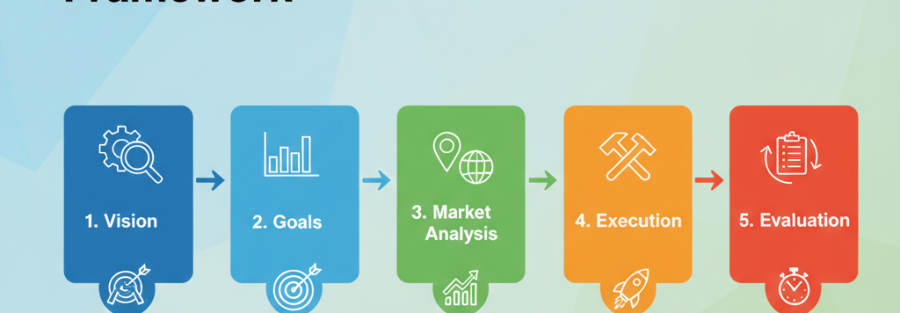
The Novatia Corporate Strategy Development Framework
Our proprietary framework, developed through extensive research and practical application across diverse Nigerian industries, follows a systematic six-phase approach that ensures comprehensive strategy development and successful implementation.
Phase 1: Strategic Assessment and Environmental Analysis
The foundation of effective corporate strategy development begins with a thorough understanding of your current position and the external environment. This phase involves:
Internal Assessment:
- Comprehensive analysis of organizational capabilities, resources, and core competencies
- Financial performance review and trend analysis
- Operational efficiency evaluation
- Leadership and human capital assessment
- Technology and digital maturity analysis
External Environmental Analysis:
- Nigerian market dynamics and growth trends
- Competitive landscape mapping and analysis
- Regulatory environment assessment
- Economic factors and their impact on your industry
- Technological disruptions and opportunities
SWOT Analysis with Nigerian Context: Our framework incorporates Nigeria-specific factors often overlooked by generic strategy models. For instance, we analyze the impact of government policies like the Nigeria Industrial Revolution Plan (NIRP) on your business, assess infrastructure challenges and opportunities, and evaluate the potential for regional expansion across West Africa.
Phase 2: Vision, Mission, and Strategic Objectives Definition
Establishing clear strategic direction is crucial for corporate strategy development for Nigerian SMEs. This phase focuses on:
Vision Development: Creating an inspiring yet achievable vision that resonates with Nigerian stakeholders and reflects local market opportunities. We help companies articulate visions that address societal challenges while driving profitable growth.
Mission Statement Crafting: Developing mission statements that clearly communicate value propositions to Nigerian customers, employees, and partners. Our approach ensures missions are culturally relevant and market-appropriate.
Strategic Objectives Setting: Establishing SMART objectives that align with Nigeria’s economic development goals while driving company growth. We typically help SMEs set 3-5 year strategic objectives with annual milestones.
Phase 3: Strategic Options Generation and Evaluation
This critical phase of corporate strategy development involves identifying and evaluating potential strategic directions:
Growth Strategy Options:
- Market penetration strategies within Nigeria
- Market development across West African markets
- Product and service diversification opportunities
- Strategic partnerships and alliances
- Acquisition and merger possibilities
Competitive Strategy Formulation:
- Cost leadership strategies adapted to Nigerian cost structures
- Differentiation approaches that resonate with local customers
- Focus strategies for niche market segments
- Blue ocean opportunities in underserved markets
Digital Strategy Integration: Given Nigeria’s rapidly evolving digital landscape, we integrate digital transformation considerations into every strategic option, ensuring SMEs can leverage technology for competitive advantage.
Phase 4: Strategy Selection and Portfolio Optimization
Corporate strategy development requires making tough choices about resource allocation and strategic priorities. Our framework employs:
Multi-Criteria Decision Analysis: We use sophisticated evaluation criteria including financial returns, risk assessment, strategic fit, implementation feasibility, and alignment with Nigerian market opportunities.
Portfolio Analysis: For diversified SMEs, we conduct portfolio analysis to optimize business unit allocation and identify synergies across different ventures.
Resource Allocation Framework: Our approach ensures optimal allocation of limited SME resources across strategic initiatives, balancing growth investments with operational requirements.
Phase 5: Strategic Implementation Planning
The most critical aspect of corporate strategy development for Nigerian SMEs is creating actionable implementation plans:
Implementation Roadmap:
- 90-day quick wins identification
- 6-month milestone planning
- Annual strategic initiatives scheduling
- 3-year transformation timeline
Organizational Design:
- Structure optimization for strategy execution
- Role and responsibility clarification
- Performance management system alignment
- Change management planning
Resource Planning:
- Financial resource requirements and sourcing
- Human capital development needs
- Technology infrastructure investments
- Partnership and vendor requirements
Phase 6: Performance Monitoring and Strategic Control
Successful corporate strategy development requires continuous monitoring and adjustment:
KPI Framework Development: We establish comprehensive Key Performance Indicators (KPIs) that track both financial and non-financial measures of strategic success.
Strategic Review Process: Quarterly strategic reviews ensure strategies remain relevant as Nigerian market conditions evolve.
Continuous Improvement Mechanism: Our framework incorporates feedback loops that enable strategy refinement based on implementation experience and changing market conditions.
Industry-Specific Applications of the Framework
Technology and Fintech Companies
Nigerian tech companies face unique challenges including regulatory uncertainty, talent acquisition, and scaling across diverse markets. Our corporate strategy development framework addresses these through:
- Regulatory compliance strategy development
- Talent acquisition and retention planning
- Market expansion sequencing across Nigerian cities
- Partnership strategies with traditional financial institutions
- International expansion planning
Manufacturing Companies
Manufacturing SMEs in Nigeria must navigate infrastructure challenges, supply chain complexities, and competition from imports. Our approach includes:
- Supply chain optimization strategies
- Local content development planning
- Export market development
- Technology adoption roadmaps
- Sustainability and ESG integration
Service Companies
Service-based SMEs require strategies that address market fragmentation, pricing pressures, and digital transformation needs:
- Digital service delivery transformation
- Market consolidation strategies
- Value-based pricing implementation
- Geographic expansion planning
- Brand development and positioning
Implementation Success Factors
Based on our experience with over 500 Nigerian SMEs, several factors determine corporate strategy development success:
Leadership Commitment and Capability
Strategy implementation requires unwavering leadership commitment. We work closely with founders and senior management to ensure they have the skills and mindset needed for successful strategy execution.
Organizational Alignment
All organizational levels must understand and embrace the strategic direction. Our change management approach ensures alignment from board level to front-line employees.
Financial Resource Management
Many Nigerian SMEs underestimate the financial resources required for strategy implementation. Our framework includes detailed financial planning and alternative funding strategy development.
Technology and Digital Capabilities
In Nigeria’s rapidly digitizing economy, SMEs must develop strong technology capabilities. We integrate digital transformation planning into every strategic initiative.
Common Pitfalls and How to Avoid Them
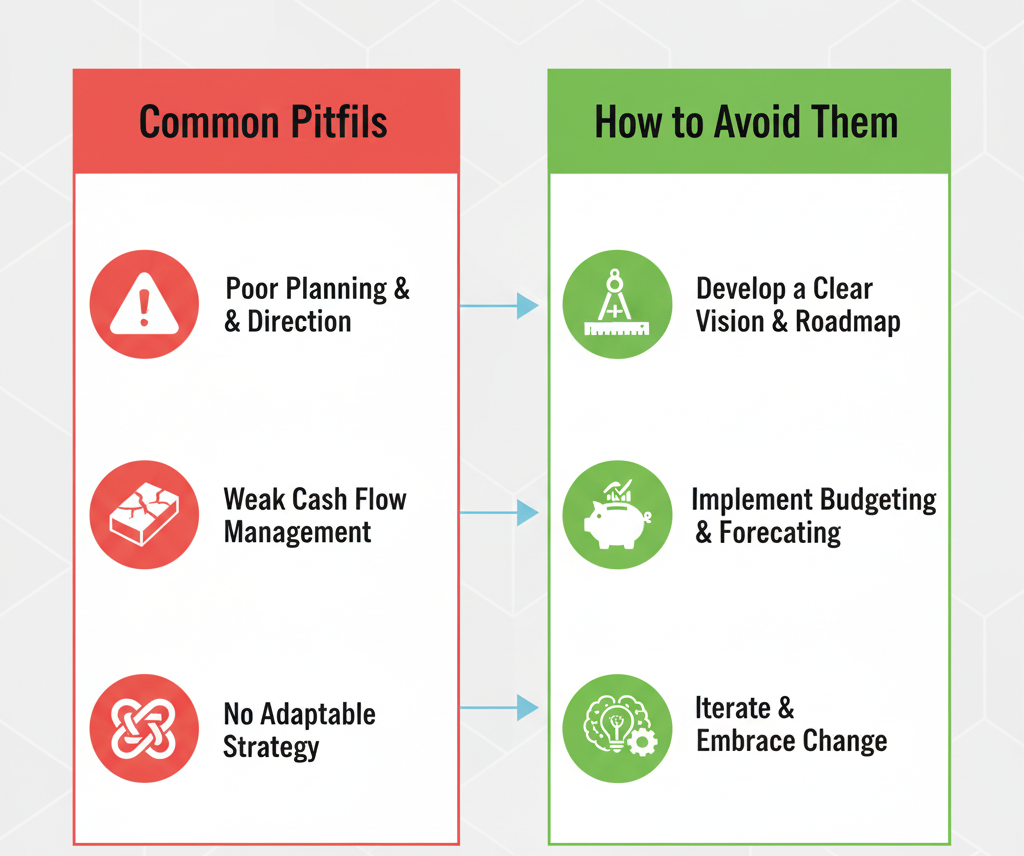
Over-Ambitious Growth Targets
Many Nigerian SMEs set unrealistic growth targets without considering market constraints and resource limitations. Our framework emphasizes achievable milestone setting with stretch targets.
Inadequate Risk Management
Nigeria’s volatile business environment requires robust risk management. We integrate scenario planning and risk mitigation strategies into every corporate strategy.
Poor Implementation Execution
The best strategies fail without proper execution. Our framework includes detailed implementation planning with accountability mechanisms and progress tracking.
Ignoring Local Market Dynamics
Generic strategy frameworks often fail in Nigeria because they don’t consider local market nuances. Our approach is specifically designed for the Nigerian context.
Measuring Strategic Success
Corporate strategy development for Nigerian SMEs success is measured through multiple dimensions:
Financial Performance Indicators
- Revenue growth rates
- Profit margin improvement
- Return on investment
- Cash flow generation
- Market share gains
Operational Excellence Metrics
- Process efficiency improvements
- Customer satisfaction scores
- Employee engagement levels
- Quality performance indicators
- Digital transformation progress
Strategic Position Indicators
- Market position improvements
- Brand recognition and value
- Competitive advantage sustainability
- Stakeholder relationship quality
- Innovation capability development
The ROI of Professional Corporate Strategy Development
Nigerian SMEs that invest in professional corporate strategy development typically achieve:
- 3-5x higher revenue growth rates compared to companies without formal strategies
- 40% lower business failure rates
- 60% faster market expansion
- 50% better access to funding and investment
- 70% higher employee retention rates
Getting Started with Corporate Strategy Development
Implementing our corporate strategy development framework typically requires 8-12 weeks for comprehensive strategy development, followed by ongoing implementation support.
The process begins with a strategic assessment that provides clarity on your current position and identifies key opportunities and challenges. This is followed by collaborative strategy development sessions that ensure stakeholder buy-in and ownership.
Our approach emphasizes practical, actionable strategies that can be implemented with existing resources while building capabilities for future growth.
Frequently Asked Questions (FAQs)
1. How long does corporate strategy development take for Nigerian SMEs?
Our comprehensive corporate strategy development framework typically requires 8-12 weeks for strategy formulation, including stakeholder consultations, market research, and strategic planning sessions. Implementation planning adds another 2-4 weeks, with ongoing support continuing throughout the implementation phase.
2. What is the typical cost of corporate strategy development services in Nigeria?
Corporate strategy development costs vary based on company size, complexity, and scope. For Nigerian SMEs, professional strategy development typically ranges from ₦2-10 million, with the investment typically generating 10-20x returns through improved performance and growth acceleration.
3. Can small businesses benefit from formal corporate strategy development?
Absolutely. Small Nigerian businesses often benefit most from corporate strategy development because it helps them compete more effectively against larger competitors, optimize limited resources, and identify growth opportunities that might otherwise be missed.
4. How often should Nigerian SMEs review and update their corporate strategy?
We recommend quarterly strategic reviews with annual comprehensive strategy updates. Nigerian businesses face rapidly changing market conditions, making regular strategy review essential for maintaining competitive advantage and adapting to new opportunities.
5. What makes corporate strategy development different for Nigerian companies compared to international frameworks?
Corporate strategy development for Nigerian SMEs must consider unique factors including infrastructure challenges, regulatory complexity, cultural diversity, currency volatility, and specific market dynamics. Generic international frameworks often fail because they don’t address these local realities.
6. How do you ensure strategy implementation success after development?
Our corporate strategy development framework includes detailed implementation planning, change management support, performance monitoring systems, and regular review sessions. We maintain ongoing relationships with clients to support successful strategy execution.
7. Can corporate strategy development help with funding and investment opportunities?
Yes. A well-developed corporate strategy significantly improves access to funding by demonstrating clear growth plans, market opportunities, and risk management approaches. Investors and lenders prefer companies with comprehensive strategic plans.
8. What role does digital transformation play in corporate strategy for Nigerian SMEs?
Digital transformation is integral to our corporate strategy development approach. We help Nigerian SMEs leverage technology for competitive advantage, operational efficiency, and market expansion while ensuring digital strategies align with overall business objectives.
9. How do you address the challenge of strategy implementation in resource-constrained Nigerian SMEs?
Our framework emphasizes resource-efficient implementation through phased approaches, quick wins identification, partnership strategies, and alternative funding mechanisms. We help companies achieve strategic objectives within their resource constraints.
10. What industries in Nigeria benefit most from professional corporate strategy development?
All industries benefit, but we’ve seen particularly strong results in technology, manufacturing, financial services, healthcare, agriculture, and professional services. Each industry requires specialized strategic approaches that address sector-specific challenges and opportunities.